



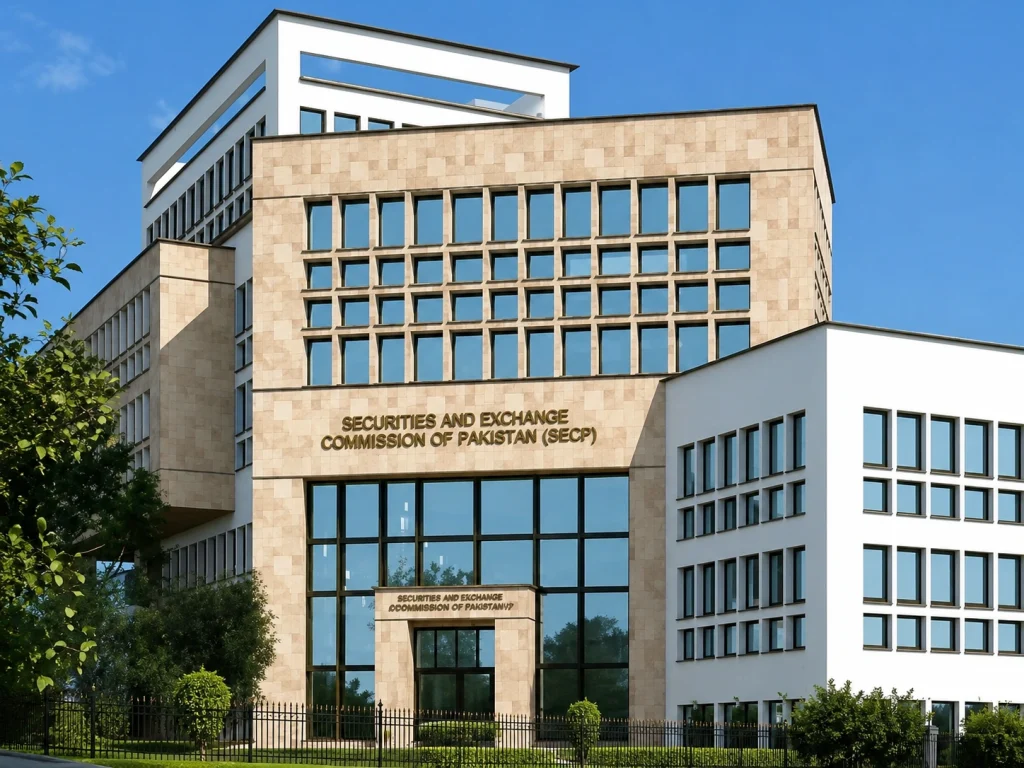
In an effort to play a crucial role in shaping the future investment choices of Pakistan, Securities and Exchange Commission of Pakistan (SECP) has launched a series of far-reaching reforms. In an official move to revamp SECP’s licensing procedure, the corporate regulator has done away with the compulsory prerequisite of obtaining security clearance prior to applying for a license if the company has any foreign corporate backing and international directors. Global corporations can now apply for their operational license through self-declaration.
The fundamental shift in policy is geared towards the systematic elimination of the bureaucratic barriers that have traditionally acted as obstacles to foreign corporate expansion within the country. The move from having the security clearance procedure be a prerequisite to entry to making it an ongoing activity will ensure that the local economy is viewed as a very aggressive arena for foreign businesses.
Bottlenecks in Security Clearances Made into Conditions
The updated SECP licensing rules directly remove this friction by shifting background verification from a rigid entry prerequisite to a concurrent oversight process. This allows fast-moving tech ventures, digital payment processors, and e-commerce platforms to secure conditional operational licenses rapidly, keeping local founders competitive on the global stage.
The revised and newly adopted SECP licensing regulations create an extremely practical system as follows:
- Self-Declaration Approvals: Foreign sponsors are allowed to file their entire licensing documentation right away, with the immediate security check being replaced by the self-declaration, which is legally binding.
- Conditional Licensing: The commission would be able to license the corporation for functioning immediately, while its background check could be carried out in parallel to the business activity.
- Guarantees Regarding Director Substitution: In order to meet national security requirements, the corporations applying have to assure that any foreign director unable to pass state security protocols will be substituted.
ALSO READ: SECP Registers 10,500 New Companies as Foreign Investment Surges 218% Across 22 Countries
Targeted Adjustments Liberate the Regulated Financial Services Industry
The business enabling provision has been specifically designed in such a way that it can attract very institutionalized capital. The newly introduced policy regime is expected to be immediately advantageous for high value-added industries, including NBFCs, capital markets, insurers, asset managers, and REITs.
Commission’s Standpoint: Commission leaders have pointed out that the modified operational framework is balanced well by ensuring that foreign investments are welcomed while also retaining sovereignty in the form of stringent regulations on these matters. This framework enables corporations with genuine intentions to firmly establish their industries within the country without jeopardizing any antimony laundering and national security policies.
Improving Predictability of the Market during Economic Transformations
The importance of this regulatory ease for business campaign cannot be underestimated. As the country undergoes active economic reforms related to modernization of its corporate tax policy, stabilization of foreign exchange reserves, and its transition to a completely digitalized economy, predictability in regulation becomes extremely important. Inconsistency of regulatory procedures was listed by international venture capitalists as one of the main barriers in their assessment of the domestic startups and mega-projects.
Through the adoption of these simplified SECP licenses into active circulars, the SECP is giving out a very strong message to the financial hubs around the world. Where structural stabilization of macroeconomics cannot be achieved overnight, easing up on the bureaucratic process involved in establishing a company would help ease some of the frustrations for financial firms around the world. This would provide the necessary regulatory confidence to foreign companies investing in Pakistan.