
Islamabad Opens Women-Only Enterprise Market in G-11 With Cashless Digital Payment System
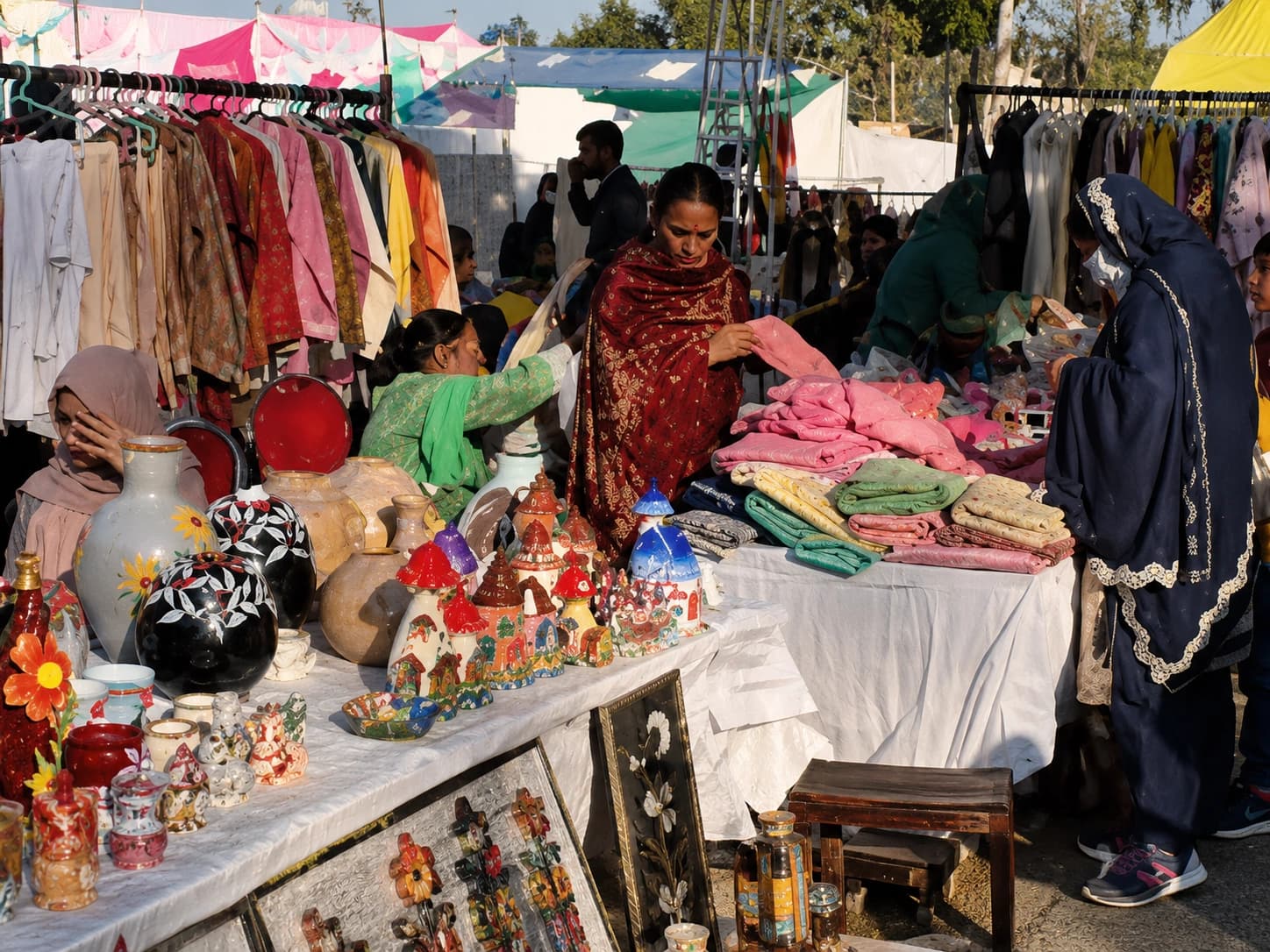
ISLAMABAD: The Islamabad Women Enterprise Market was launched in G-11, Islamabad, last week, offering a concrete solution to the long-standing economic inequality faced by Pakistani women with a model that bridges this gap through infrastructure development, giving women the resources to conduct business within the formal system.
MNA and Parliamentary Secretary Farah Naz Akbar inaugurated the Islamabad Women Enterprise Market in an event jointly organized by the Islamabad Women Chamber of Commerce and Industry, Capital Development Authority, and Metropolitan Corporation of Islamabad, thus bringing together some of the most powerful institutions of Islamabad under one banner in pursuit of a common cause. This collaboration marks a significant step in the right direction for making the initiative successful since all four organizations come together with their combined influence and resources. It is pertinent to mention here that the Islamabad Women Enterprise Market runs entirely on cashless transactions, which not only benefit the women traders but also help integrate them into the formal financial sector.
Female Entrepreneurship at One Percent is a National Crisis
The Islamabad Women Enterprise Market addresses a gender imbalance in the entrepreneurial world in Pakistan that moves from an issue of inequality to an issue of economic inefficiency. Females make up 1% of the country’s entrepreneurs, while males make up 21%. The difference is not one of desire, skill, or necessity on the part of the women of Pakistan, but rather an inefficient economic system.
It is a matter of great concern that women account for less than 8% of all the small and medium business units in Pakistan which number in more than 5 million. Additionally, 91% of women are reluctant to approach any financing institutions for funding.
Powers of JazzCash in the Cashless System
The cashless system followed by the Islamabad Women Enterprise Market has greater meaning than mere convenience. According to Imtiaz Ali, Senior Deputy Chief Manager from the State Bank of Pakistan, the cashless system empowers women entrepreneurs to improve their practical financial skills while simultaneously building a relationship with banks — providing the history required by lenders before issuing loans.
JazzCash acts as the technology partner that provides the digital payments platform through which all transactions in the market flow. Every purchase made by a woman entrepreneur in the Islamabad Women Enterprise Market will leave a financial footprint, which will enable her to develop a credit profile in the process, slowly overcoming the institutional reluctance that keeps 91% of women in Pakistan from accessing financial services.
Consistent with the National Financial Inclusion Strategy of the SBP
The Islamabad Women Enterprise Market is consistent with the National Financial Inclusion Strategy of the State Bank of Pakistan for 2024-2028, whose aim is to narrow the gender disparity in bank usage from 30% to 25%. The market achieves this by integrating women who use cashless payments due to their involvement in commercial transactions, not necessarily through awareness programs.
The recent achievements on the front of women's financial inclusion create an inspiring basis. There has been an increase in financial inclusion among women, which increased from 4% to 52%, whereas the gap in accessing banking services was decreased from 47% to 30% within seven years. Islamabad Women Enterprise Market is a result of these successes by translating statistical figures into business performance by individual women entrepreneurs.
ALSO READ: SBP Launches Go Cashless Campaign for Eidul Adha 2026, Here Is What Buyers Must Know
Infrastructure That Breaks Down Barriers at the Site of Trade
The Islamabad Women Enterprise Market offers female entrepreneurs a seemingly simple yet profoundly empowering infrastructure – an organized space for trade that enables women to engage in commerce free from the challenges posed by informal markets, security risks, and institutional discrimination prevalent in the majority of Pakistan’s commercial settings.
The all-women market offers a marketplace tailored to the requirements of women entrepreneurs who may be too shy about conducting themselves in markets with both genders present. This reduces the barriers faced by skilled Pakistani female entrepreneurs who would rather be running micro-businesses than growing into larger companies.
Impact When Women Are Provided with Commercial Infrastructure
Lahore, Karachi, Peshawar, and Quetta have many women who have knowledge about business and products but do not have the commercial infrastructure needed for turning their resources into formally recognized businesses.
The amalgamation of a physical market place, payment mechanisms using digital methods, formal banking links, and institutional backing through the CDA, MCI, and SBP presents an example that tackles the root cause of Pakistan’s 1% female entrepreneurship rate, as opposed to only tackling the symptoms.
Leave a Reply
Your email address will not be published. Required fields are marked *