
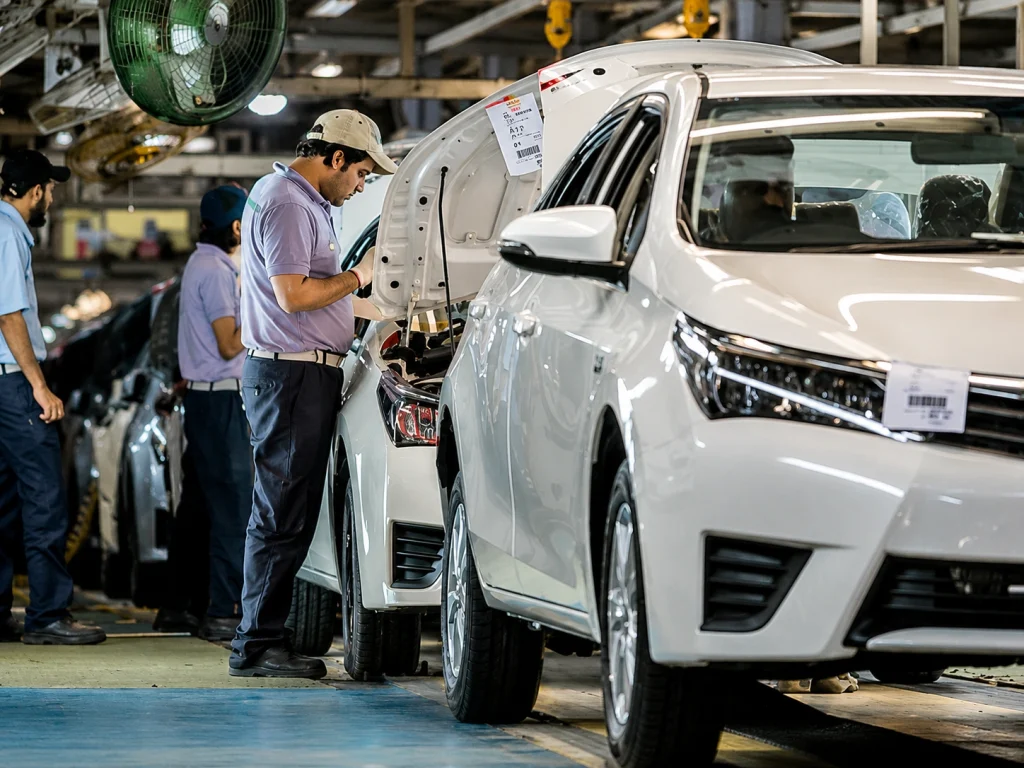
The Government of Pakistan’s Federal Budget 2026 promises a comprehensive package for the automotive sector of Pakistan, aiming at a structural reform of the tax framework that made automobile prices among the most expensive compared to per capita income in the area. Analysis of policy documents prior to the upcoming budget shows intentions to eliminate supplementary customs duties, progressively lower regulatory duties, and adopt an innovative tariff policy for all forms of automobiles, auto components, and new energy vehicles. This will make the process of purchasing an automobile in Pakistan much cheaper for the first time in recent history.
The views of the lenders will be crucial to determining the actual format that these recommendations take, but what is clear from the Pakistan auto industry budget 2026 is that they point towards a particular path – cutting costs throughout the supply chain.
Customs duties on auto components and CKD kits will be significantly reduced
The first and foremost provision of the Pakistan auto industry budget proposal for 2026 is related to the customs duties on auto components and completely knocked down (CKD) kits. Under the proposed model, the customs duty on auto components will be reduced to 5%, whereas the assembled cars will have to pay a flat 10% customs duty.
The CKD kit tariffs, which have been a major source of expense in the local assembly of cars, will remain constant at 5 to 10 percent based on category. In this way, it is possible for the government to provide protection to domestic manufacturing sectors in particular while reducing input costs at the same time – thus, solving the main issue which Pakistani assembly plants have always complained about.
Moreover, the government will also scrap the customs duty altogether within the National Tariff Policy system and reduce the regulatory duties gradually in phases rather than making a one-time cut. This shows that the government is taking into account the impact on revenue generation due to the Pakistan automobile industry budget 2026 reform process.
An important structural change that features in the Pakistan automobile industry budget proposal for 2026 is the extension of benefits for new energy cars from purely electric vehicles to hybrids, which at present occupy an unclear space within the tariff/incentive regime of Pakistan.
ALSO READ: Volvo Cars Profit Drops 16% in Q1 as US EV Subsidy Hits Sales
Electric Bicycles, Rickshaws, and Electric Vehicles Exempt from Duties
The Pakistani automobile industry budget package for 2026 offers its strongest inducements to the bottom end of the automobile market. This means that electric bicycles, electric rickshaws, and electric vehicles can benefit from being completely exempt from any duties at all. Such an exemption applies specifically to the modes of transport most frequently utilized by the lower and lower middle class in Pakistan. The government’s intentions in offering such inducements include both the promotion of cleaner transportation methods and the lowering of transportation costs.
In particular, electric rickshaws constitute an impactful target since they form a major source of earnings for many Pakistani households, and thus lowering the cost of purchasing these by granting duty exemptions can help bring down transport costs while also speeding up the move away from fuel-based three-wheelers in the country’s bustling city centers.
Decision regarding budget yet to come as lender consultations ongoing
Pakistan auto industry budget 2026 suggestions have many implications for end users, manufacturers, and importers alike, but these suggestions are still suggestions as they are not policies. The government will analyze this suggestion during the coming week after consulting with lenders as well, making it possible for the government to make any changes prior to announcing the budget.
For the Pakistani buyer who has seen the price of his car rise year after year through the budget cycle, the Pakistan auto industry budget package for 2026 is proof that help is at hand, assuming the final budget lives up to what these papers promise.

Focus Pakistan is an independent digital news and media platform dedicated to delivering credible, insightful, and impactful journalism across Pakistan and beyond. The publication covers a broad range of sectors including business, economy, technology, telecommunications, aviation, automotive, infrastructure, energy, tourism, public policy, and national affairs.
Committed to accuracy, transparency, and editorial integrity, Focus Pakistan combines breaking news coverage with in-depth analysis, feature stories, expert commentary, and research-based reporting. The platform aims to provide readers with timely, factual, and balanced information while promoting informed public discourse and responsible journalism.
Through its commitment to high editorial standards, Focus Pakistan strives to be a trusted source of news and analysis for policymakers, business leaders, industry professionals, and the general public.