
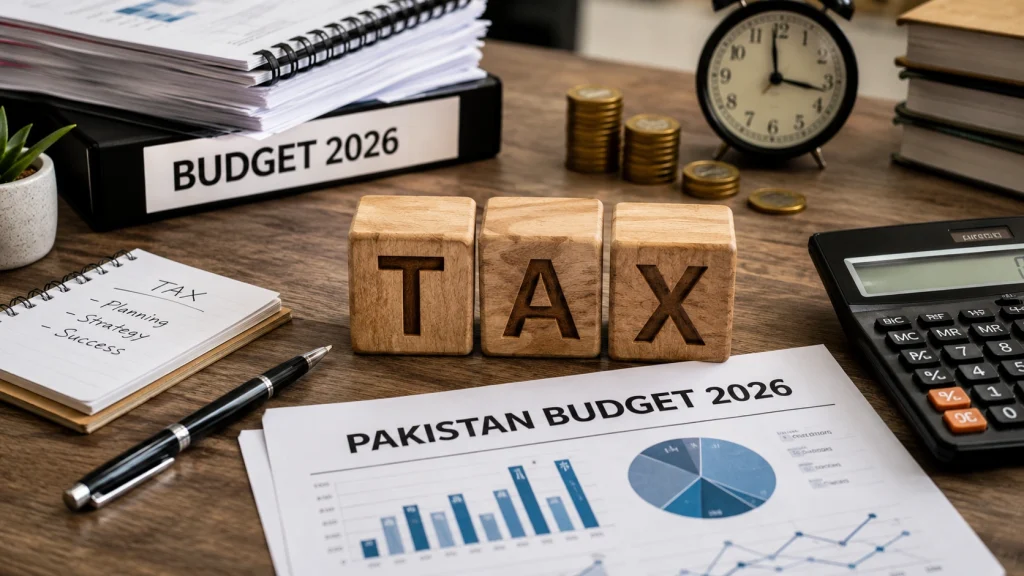
Pakistan tax target 2026 could cross Rs15.3 trillion as the government and the IMF discuss major new taxes and aggressive revenue measures in the upcoming federal budget.
ISLAMABAD: The government of Pakistan is formulating a harsh financial strategy that targets another PKR 2,000 billion in taxation from an economically beleaguered populace suffering due to the effects of inflation. Such heavy taxes will be the core of the next budget, which will be prepared under the watchful eye of the IMF.
With the economy facing such difficult times ahead, an IMF mission is in Pakistan today for talks that could prove critical. The Pakistani team that will participate in these talks will be headed by the Finance Minister Muhammad Aurangzeb and the Governor of the State Bank of Pakistan. The talks form part of efforts to negotiate for a new larger bailout package.
Pakistan Tax target 2026
Sources inside the ministry of finance informed Focus Pakistan that, the government is contemplating a tax revenue collection target higher than PKR 15,300 billion. It would be remarkable how much more than the ongoing fiscal year’s number this amount would be. However, for the FBR to meet its challenging target, it will need to find means of increasing its revenue by at least PKR 2 trillion.
Also Read: Pakistan Receives $1.2 Billion IMF Financing Under EFF and RSF Deal
However, the IMF is still adamant about its insistence on expanding the tax base. The two parties will be engaging in discussions regarding various suggestions concerning the inclusion of other economic areas under the tax bracket during the next meeting. One of the key issues in the talks will focus on drastically reducing sales tax exemptions.
Austerity and Debt Management
Taxation is but one element of this strategy. The officials would also like to talk about controlling overall spending. The administration aims to improve the tax-to-GDP ratio—a metric where Pakistan has historically lagged behind its regional peers.
A critical component of this economic roadmap involves managing the country’s suffocating debt. This government wants to negotiate an approach to lower their overall debt down to about 70% of the total size of the economy. This will take careful planning, combining both heavy taxation and sustainable economic growth, something which no past government has been able to do.
Expanding the Net: 7.5 Million Filers
In a bid to shift the burden away from existing taxpayers, the government is setting a target to receive 7.5 million income tax returns in the next fiscal year. By digitizing the economy and tracking high-value transactions, the FBR hopes to document thousands of currently non-compliant individuals and businesses.
This “documentation drive” serves as a cornerstone of the IMF’s recommendations. However, the transition remains difficult for a population that views the tax machinery with skepticism.
The Human Cost of Stability
Though the above-mentioned actions seek to stabilize the economy, which is volatile, the human impact is still significant. The upcoming budget will surely challenge the endurance of the middle and lower classes. With the arrival of the IMF mission in the Ministry of Finance today, the nation awaits anxiously. The resulting budget will determine whether Pakistan can finally break the cycle of debt or if the “tax swamp” will only pull the public deeper into financial distress.

Focus Pakistan is an independent digital news and media platform dedicated to delivering credible, insightful, and impactful journalism across Pakistan and beyond. The publication covers a broad range of sectors including business, economy, technology, telecommunications, aviation, automotive, infrastructure, energy, tourism, public policy, and national affairs.
Committed to accuracy, transparency, and editorial integrity, Focus Pakistan combines breaking news coverage with in-depth analysis, feature stories, expert commentary, and research-based reporting. The platform aims to provide readers with timely, factual, and balanced information while promoting informed public discourse and responsible journalism.
Through its commitment to high editorial standards, Focus Pakistan strives to be a trusted source of news and analysis for policymakers, business leaders, industry professionals, and the general public.