

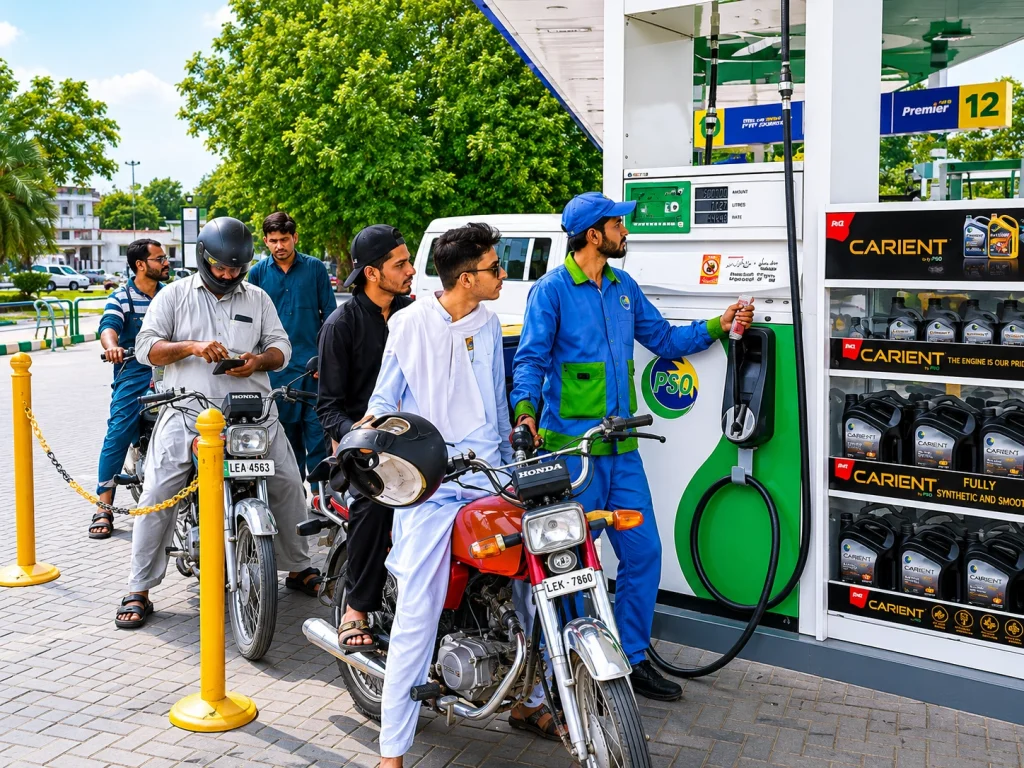
ISLAMABAD: The Federal Government of Pakistan has decided to decrease the prices of both petrol and diesel by Rs22 per litre during their celebrations on the third day of the Eid festival, thereby relieving the financial pressures of millions of people suffering from soaring inflation rates in the country. Currently, the price of one liter of petrol is Rs381.78 while that of diesel stands at Rs380.78.
It was reflected in the formal message issued by the Prime Minister’s office, which clearly showed that it was not just coincidence that the announcement came during the period of Eid. The cost of fuel impacts every part of the economy, right from the rickshaw puller who transports people in Karachi to trucks plying in Punjab.
The Second Slash in a Week
This certainly isn’t the first instance of emergency measures being announced so quickly. As per the confirmation of the Prime Minister, Mr. Shehbaz Sharif, there had been an easing of the price of petrol and diesel in the very previous week. Thus, two slashes in petrol and diesel prices in as many weeks have set a clear trend in the government’s strategy towards fuel pricing amid Pakistan’s financial tightrope walking.
The price of petrol in Pakistan has been the trigger for many protests from the people over the last two years. High petrol prices reverberate throughout the entire value chain, from higher transportation charges to food prices to household expenses. Any movement downwards, even the slightest, is politically and economically highly significant.
Vulnerable Sectors in Transportation Subsidized
Which are the sectors benefiting the most
As pointed out by PM Shehbaz Sharif, despite unfavorable economic circumstances, the government has ensured the continuation of subsidy on the fuel meant for these particular sectors. This includes public transportation services, goods carriers, motorbike drivers, and rickshaw drivers.
By themselves, motorcycles contribute the highest percentage of registered vehicles in the country. An effective drop in the cost of petrol in the country thus affects many commuters on a day-to-day basis. Similarly, subsidies in freight transportation are meant to ensure that the impact does not spread to other items of consumption.
ALSO READ: Govt Collected More Through Petroleum Levy in Two Years Than IMF Loan Programs Combined
International Crude Oil Prices: Wind Beneath the Wings of Reduction
There was an external factor that made possible the drop in domestic fuel prices. Prior to the reduction, global crude oil prices experienced sharp falls, giving Islamabad room to reduce prices for domestic consumers. In particular, the international benchmark Brent crude witnessed a decline of $1.46 per barrel to close at $92.25 per barrel. Additionally, US benchmark West Texas Intermediate also fell by 73 cents to close at $88.17 per barrel.
Where Do the Cuts Fall Short?
A broader perspective
While the much-needed respite is appreciated, observers and experts alike argue that the existing petrol price in Pakistan is still significantly higher compared to what it was only a few years back. Prices of fuel have risen drastically in Pakistan since 2022-2024 because of the government’s efforts to stabilise its economy and adhere to IMF policies which necessitated the elimination of subsidies on energy.
The transport unions of Karachi and Lahore have demanded increased and more substantial reductions, since fare structures fixed on the basis of peak hour charges have not been reduced according to notifications issued by the government. For the common man, reduced fares on paper do not necessarily mean cheaper fares on the roads.
Economic Background: Stability in Times of Structural Challenges
The economy of Pakistan exhibited signs of stabilisation in the beginning of 2025 and 2026. The rate of inflation has been declining, foreign exchange reserves have been restored, and some stability has been achieved in the rupee value. These factors together have allowed the government to contemplate lowering fuel prices without creating panic in the financial market.
What’s Next
The prices of fuels in Pakistan are adjusted biweekly based on the pricing mechanism of international petroleum prices. The upcoming adjustment cycle will reveal if the government continues its cutting trend or decides to stop based on the movement of international crude and the performance of the Pakistani currency. If the price of Brent continues to fall below the $90 level, at least one more reduction would be expected.
However, at present, the lowering of the price of petrol in Pakistan provides some respite, albeit partial, to consumers, transporters, and small businesses alike. Whether this is the start of a continuous downward spiral or an “Eid special” can be better discerned in the coming two weeks.