


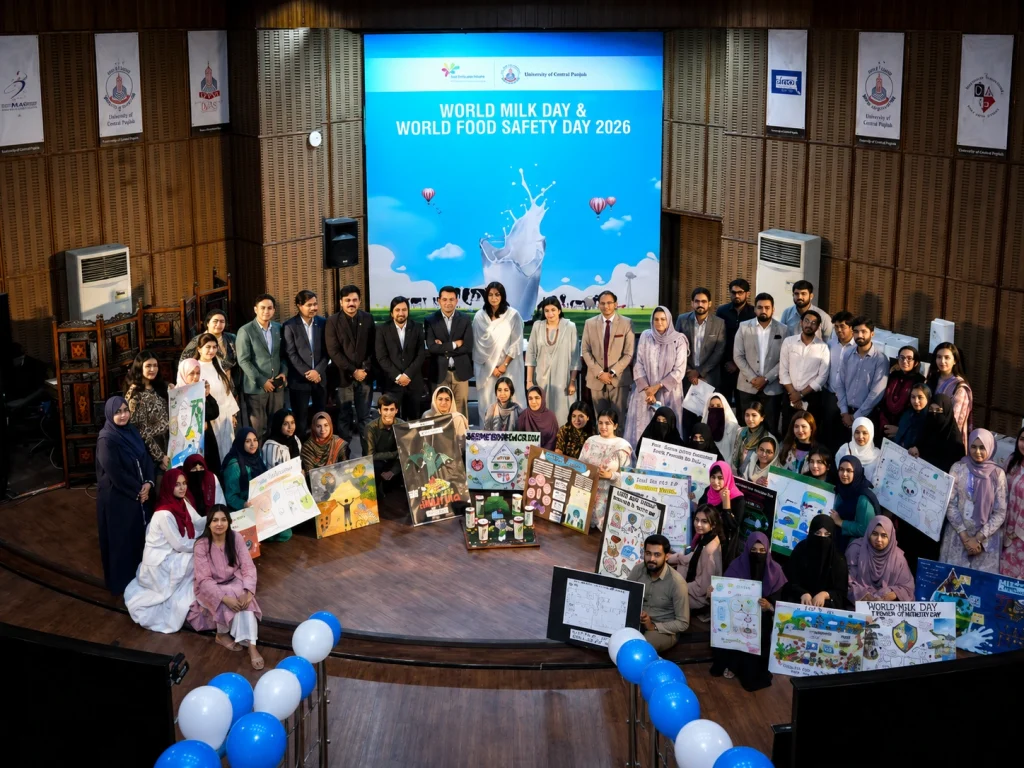
LAHORE: It is FrieslandCampina Engro Pakistan and the University of Central Punjab that join hands for a significant dialogue event in Lahore on World Milk Day 2026, highlighting the magnitude of Pakistan’s informal dairy challenge in order to formalize its industry to save the lives of 10 million malnourished kids.
Pakistan stands tall as the fourth largest country in terms of milk production in the world, and yet 92 percent of this milk supply is distributed to consumers through an informal, unregulated, and often adulterated system. This paradox formed the core theme of a very impactful initiative organized by FrieslandCampina Engro Pakistan Limited (FCEPL) along with the Department of Food and Nutritional Sciences, University of Central Punjab for World Milk Day and Food Safety Day 2026 in Lahore.
The Pakistan dairy food safety challenge: statistics behind the concerns
The issue of Pakistan’s dairy food safety challenge entails serious implications that go far beyond mere consumer inconveniences. According to estimates, about 40% of all children below the age of five years in Pakistan, totaling around 10 million, have stunted growth due to severe malnutrition. Over 2.7 million of them have acute forms of malnutrition. In this context, the fact that nine out of ten milk packets purchased in Pakistan are not regulated becomes particularly alarming and demands to be addressed within the scope of the dairy food safety 2026 conference in Lahore.
Formalization The Solution Structure for the Sector
The major theme of the event revolved around the idea that the formalization of the dairy sector was one of the most important tools available to Pakistan’s food safety system. Supply chain management and regulated processes not only help to ensure the absence of any contaminants but also ensure that the products are consistent in terms of nutritional value. Moreover, consumers need to be provided with enough confidence regarding the consumption of dairy products in packaged form, which the current structure of the market lacks.
ALSO READ: Pakistan Moves Against Unsafe Syringes as HIV Infections Rise in Key Areas
Misconceptions about packaged milk fueling the crisis
One of the major themes that came up during the Pakistan dairy foods safety discussion was overcoming the public misconceptions surrounding loose milk versus packaged milk products. Price concerns, lack of trust in the process itself, and ingrained consumer behavior mean that the majority of Pakistanis continue to buy their milk from the former rather than the latter despite the associated risks of contamination and adulteration that packaged milk prevents. According to Dr. Kanza Aziz Awan, who heads the Department at UCP, this is both a scientific issue and a social one.
Voices from policy emphasize the urgency
The voice of Ms Salma Butt, the Special Assistant to the Chief Minister of Punjab, and Mr Munir Hussain Chopra, the Director of the Punjab Food Authority, underscores the significance of ensuring policy harmony in the field of nutritional sciences. The commitment to make consistent progress toward curbing adulteration and food safety issues is also clear. Their attendance at the Pakistan dairy food safety conference is a clear indication that the provincial government considers the milk market as an important intervention site for policy change.
World Milk Day as an avenue for transformation
The dialogue ended in making policy proposals and giving appreciation to participants by reinforcing the importance of having a strong dairy food safety system in Pakistan to improve nutritional outcomes for children in Pakistan.
What must happen next
The Pakistan dairy food safety 2026 discussion has outlined three core areas that need attention. These include formalizing the dairy supply chain using regulatory frameworks and investments, creating consumer confidence on packaged milk through consistent communication to the public, and harmonizing policies at the Punjab Food Authority, the Ministry of National Food Security, and the private sector. So long as the country’s 92 percent unregulated milk persists, its stunting and malnutrition problem will keep growing from the same poisoned well.