



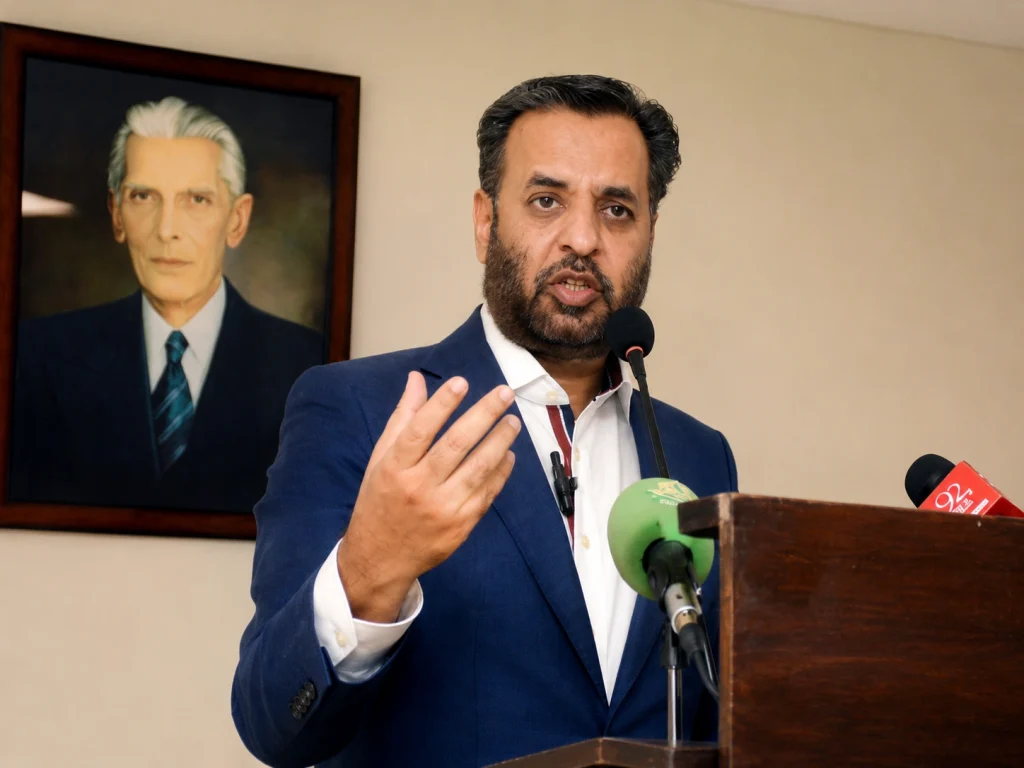
Press conference in Islamabad from Pakistan’s Federal Health Minister to reveal shocking genome profile for the nation, mandatory thalassemia screening before marriage, establishment of genome laboratories and move towards preventive medicine due to threat of brain drain and disease burden worth Rs 200 – 300 billion rupees.
ISLAMABAD: Pakistan’s Federal Minister for Health did not come to Wednesday’s press conference with words meant to soothe. Mustafa Kamal announced his department’s achievement of completing a genome profile in Pakistan by declaring that health care is a matter of national security. Diseases, overcrowded hospitals, and brain drain have become security threats for the stability of Pakistan, Kamal told those assembled to hear him speak, which should be treated as seriously as any other national security threat.
Healthcare National Security Speech As Said By Mustafa Kamal
Addressing the genome profile media conference, Mustafa Kamal spoke in one of the toughest tongues ever spoken by any health minister of Pakistan. He made it very clear that there hasn’t been an outbreak of any kind, not even an epidemic anywhere in the country. However, a pandemic situation does prevail within Pakistan’s hospitals due to overcrowded, understaffed facilities and poor practices focusing on treatment rather than prevention, costing around Rs200-300bn per year.
The minister criticized Pakistan’s reliance on foreign laboratories to run its diagnostic tests, noting the irony of an atomic nation unable to perform high-end diagnostics at home. The minister accepted that there were budget restrictions, but he insisted that the government was not going to walk away from efforts to build modern healthcare facilities, which included genome labs.
Compulsory testing for thalassemia before marriage
One of the most specific proposals to be made by the Health Minister at the healthcare press conference was concerning compulsory testing before marriage. The Health Minister announced that thalassemia testing would be made obligatory prior to marriage. This is a measure taken specifically to tackle one of the most widespread and expensive genetic diseases in Pakistan, at the root of the problem. Testing centers are being built within the general framework of the preventive healthcare policy demanded by the national security paradigm.
ALSO READ: Pakistan Moves Against Unsafe Syringes as HIV Infections Rise in Key Areas
Genome Profiling Building Block for Modern Health Policy
The conference itself revolved around genome profiling, the process whereby individuals’ genetic makeup is mapped out in order to forecast potential health risks and devise an appropriate course of action. According to Mustafa Kamal, it is time for Pakistan to shift from the current reactive system to an advanced technology-based healthcare framework that can detect any future health risks. Genome profiling reflects precisely that vision and also indicates that the government plans to give genomic science the same emphasis as hospitals and general healthcare.
Brain Drain: The crisis feeding into crisis
Besides the current crisis of health care, another critical area covered by the national security lens adopted by Minister Mustafa Kamal is brain drain. Pakistan’s economic crisis is leading its highly trained doctors, scientists, and other health care workers to leave for foreign shores at an alarming rate, as indicated by the minister. No state can endure for long under the threat of brain drain; however, the failure of the health sector in the state is making things worse and forcing many individuals to migrate out. By 2030, it is estimated that Pakistan will become the fourth largest populated state.
The importance of the discourse
The declaration of Mustafa Kamal regarding the matter of health as a matter of national security is important in the context that it changes the terms of debate surrounding the matter. In describing the matter of hospitals’ inability to cope as a pandemic situation and disease expenditure as a strain on national security, there emerges a clear need for change, one that goes beyond piecemeal reforms. Genome profiling, thalassemia testing and local labs are some of the areas that indicate that the government has acknowledged the gravity of the situation.