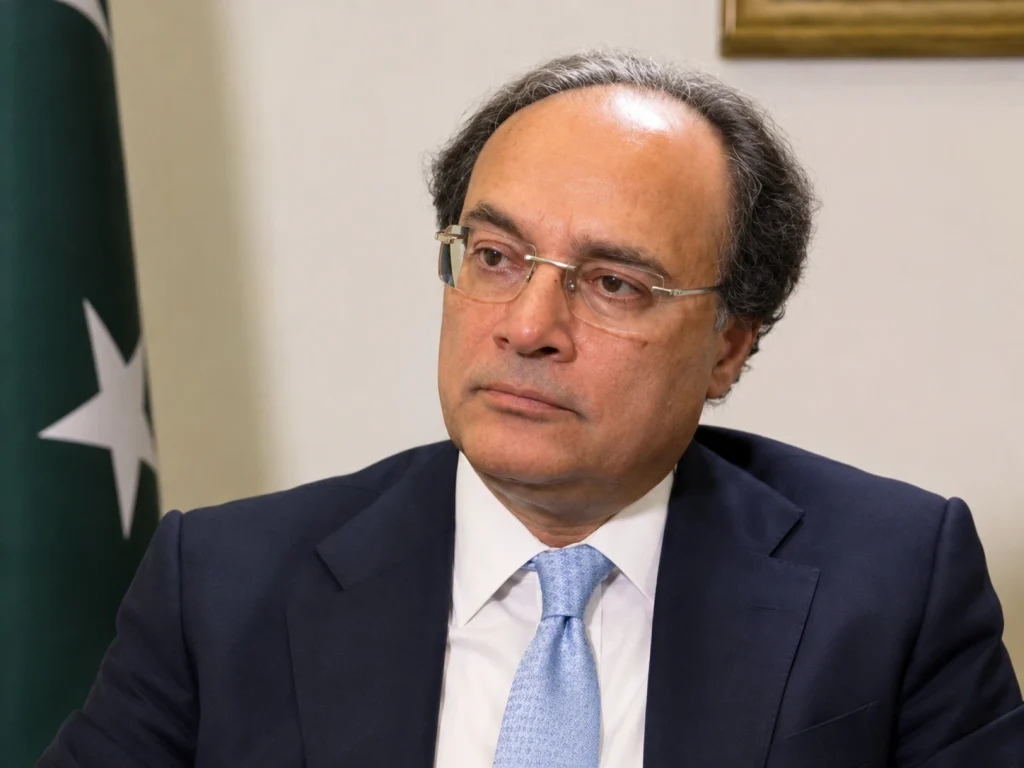
Muhammad Aurangzeb, Pakistan’s Finance Minister, appeared on TV. It was reported in some media channels that the IMF insisted on Pakistan imposing tax on solar panel installation. This report is false.
“The matter was never part of the discussion, and there has not been any such request from the IMF,” commented Aurangzeb. It must be pointed out that the allegation regarding solar panel tax proposed by the IMF was entirely false, and was debunked by the finance minister without any delay.
Reasons Why the Rumour Got Traction
To begin with, the tax rumor regarding the solar panel is not baseless. There have been talks about increasing revenue streams, subsidies, and expanding the tax base throughout the ongoing negotiations that took place between Pakistan and the IMF on the issue of Extended Fund Facility. In this case, virtually all sectors were under scrutiny.
Solar power generation has seen massive growth in Pakistan within the last two years precisely due to the fact that electricity had become too expensive to bear for consumers. The implementation of net metering grew extensively as rooftop installation soared.
It would have been harmful to the political and economic interests of the nation. It is indeed reassuring to know from Aurangzeb that the tax on solar panels proposed by the IMF was never even considered.
The Issue of Expensive Power Is the Key
With solar power issues clarified, Aurangzeb shifted to the bigger issue at hand. He admitted that high cost power is a continuing problem for industries in Pakistan. This issue has been identified by manufacturing industry, IT companies, mining firms, among others, who pay exorbitant amounts in electricity costs.
It was clear that he did not fear addressing where the root cause lied. It has become an institutional burden that is reflected through capacity charges in every electricity bill within the country. Capacity charges are fees paid for producing capacity that may be unused and represent a substantial amount of payments made every month.
As per Aurangzeb, the government was already in the process of removing cross-subsidies in favor of the industries, along with Energy Minister Awais Leghari. Furthermore, the process of implementing wheeling and other measures is also proceeding within the framework of an overall plan designed to enhance the efficiency of the power sector.
A Time for Short Term Solutions Is Passed It’s Time for Long Term Changes
One of the most important messages conveyed by Aurangzeb during the show was related to the general strategy adopted by the government towards energy policy in the country. “Pakistan,” he stated, “is shifting from short term measures to long term structural changes.”
There is, however, a price that the country must pay for that decision. The results are going to be seen not before a couple of years have passed. The minister did not try to make people believe that he is offering a solution which is easy to achieve.
Such candor regarding timelines is uncommon in Pakistan’s economic discourse. It depends on how well the government is able to adhere to this level of candor or whether it backs down into taking quick fixes for political gain.”
ALSO READ: Aurangzeb Pushes Pakistan REITs Reform to Unlock Real Estate Capital
DISCO Privatization Gets Underway
The flagship program in Aurangzeb’s energy reforms is the privatization of distribution companies of electricity known as DISCOs that form the last link in the chain from power production to end-use customers. These firms have long remained inefficient, loss-making, and unmanageable under state ownership.
EOIs have been announced for three DISCOs by the government already, while another two will be forthcoming soon. Aurangzeb assured that the first lot of DISCOs will be transferred into the hands of the private sector before the year ends, with other lots coming up in future phases.
The DISCOs’ privatization in Pakistan is not a new concept because it has often been talked about, delayed and even discarded on several occasions. This time around, what sets privatization apart from the rest is its seriousness of implementation along with the regulatory regime being put in place.
Privatisation Requires Regulation
One potential problem that Aurangzeb identified with the previous attempts at privatisation in Pakistan is something that should be carefully considered in order to avoid future pitfalls. Simply transferring ownership from a public monopoly to a private monopoly will result in less accountability.
The Minister underlined the point that regulation is not a post facto consideration. Efforts are currently being made to ensure that the regulatory system is both robust and effective enough to protect consumers in light of the takeover by private entities.