


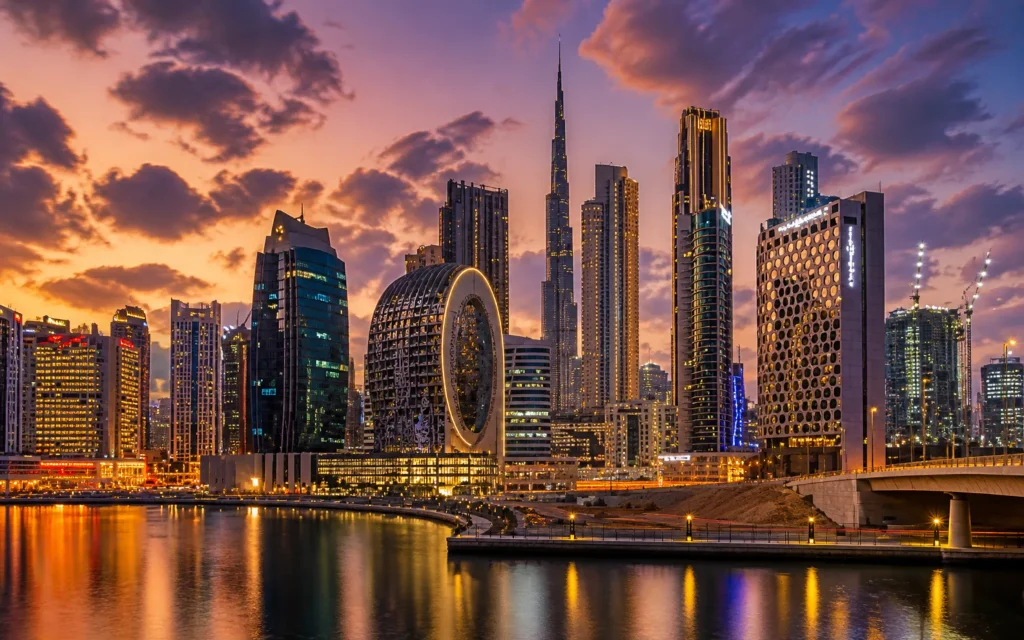
DUBAI: The Dubai property transactions crosses AED 68.56 billion last April, a 20% increase from the previous month, according to figures released by the Dubai Land Department this week. This is a figure that cannot be ignored, especially when considering why it has come about. Foreign investment drove the surge. Demand followed. Neither shows any sign of slowing.
Dubai did not stumble into this position. The emirate made a deliberate policy call when it eased property visa regulations and offered a two-year residential visa to anyone buying property above the minimum investment threshold. That decision expanded Dubai’s buyer pool well beyond traditional investors. People who previously treated Dubai as a short-term destination suddenly found a legal pathway to residency attached to a property purchase. Many took it. April’s transaction volumes reflect exactly that calculation playing out at scale.
The buyers arriving through this channel are not casual. Russian, Chinese, Indian, and Western European investors dominate the foreign purchaser mix. They bring capital, they move quickly, and they buy in segments, Palm Jumeirah, Downtown Dubai, Dubai Marina — where prices already stretched well beyond what most residents earn in years.
What the 20% Jump Actually Means
A monthly rise of 20 percent in transactions in an already heated market in 2023 and 2024 cannot be considered a statistical outlier. It signals momentum. Dubai’s property market did not cool after its pandemic-era boom. It consolidated, then accelerated again.
Also Read: Aurangzeb Pushes Pakistan REITs Reform to Unlock Real Estate Capital
Developers read this clearly. Major players brought aggressive off-plan pipelines to market in early 2026, betting on sustained foreign appetite. April validated those bets. Sales in premium segments absorbed supply faster than developers launched it. That imbalance does not resolve quickly.
The Side of the Story Dubai Rarely Tells
The 20% surge looks different depending on where you stand in Dubai’s economy. For a foreign investor sitting in Moscow, Shanghai, or Mumbai, April’s data confirms Dubai remains the most accessible, tax-efficient, and politically stable real estate market in the region. The visa incentive sweetens an already compelling case.
For a mid-level Pakistani, Indian, or Arab expatriate working in Dubai the people who actually run the city’s hospitals, schools, logistics networks, and service industries the same data signals something else entirely. Each time the monthly record rises, ownership becomes increasingly distant. There was a sharp rise in rents until 2025. This spike in transactions directly impacts landlord demands at the next renewal. Dubai’s official narrative frames foreign investment as a rising tide. The rental market tells a more complicated story.
No Cooling in Sight
Dubai has no policy incentive to slow this down. Transaction volumes generate fees, foreign capital builds reserves, and record figures attract more record figures. The government’s strategic interests and the market’s momentum point in the same direction.
That alignment works well in benign conditions. Dubai’s April performance reflects a market firing on every cylinder. Whether the fuel sustains or foreign capital eventually finds another destination remains the question the data cannot answer and Dubai’s policymakers show little interest in asking.

Focus Pakistan is an independent digital news and media platform dedicated to delivering credible, insightful, and impactful journalism across Pakistan and beyond. The publication covers a broad range of sectors including business, economy, technology, telecommunications, aviation, automotive, infrastructure, energy, tourism, public policy, and national affairs.
Committed to accuracy, transparency, and editorial integrity, Focus Pakistan combines breaking news coverage with in-depth analysis, feature stories, expert commentary, and research-based reporting. The platform aims to provide readers with timely, factual, and balanced information while promoting informed public discourse and responsible journalism.
Through its commitment to high editorial standards, Focus Pakistan strives to be a trusted source of news and analysis for policymakers, business leaders, industry professionals, and the general public.