

ISLAMABAD: Finance minister says stagnant exports require innovation rather than mere policy solutions as lawmakers approve 5 percent social media income tax, abolish 1 percent exporter withholding tax, and deal with Rs1.5 billion lawsuit against the Engineering Development Board.
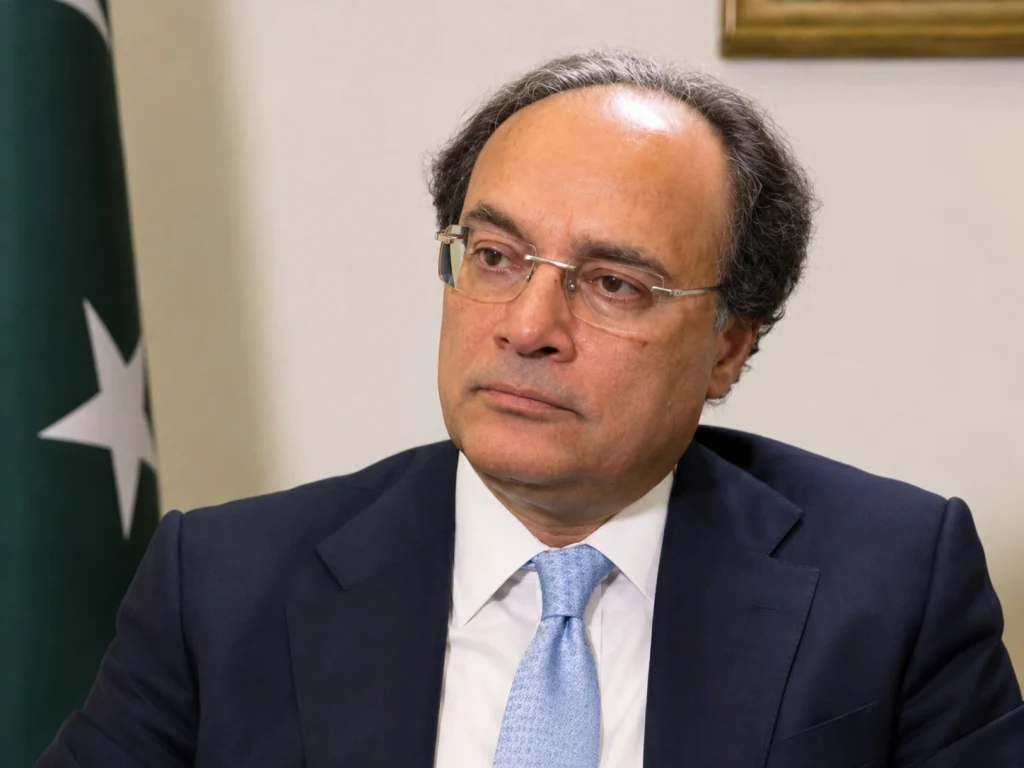
The Finance Minister of Pakistan has issued a very candid statement about his country’s export figures on Monday. Muhammad Aurangzeb addressed the Senators at the Standing Committee on Finance and Revenue, revealing that exports from Pakistan have been stuck at the same level for five consecutive years. He emphasized that it was now time for the companies to innovate since the old system was exhausted.
Reasons for Pakistan’s lackluster exports According to Aurangzeb
While briefing the committee in the third consecutive meeting of the Finance Bill 2026, Aurangzeb directly associated the poor export performance of Pakistan with the traditional approach that is being followed by businesses. He appealed to industry to take up innovation in order to help the government make an environment conducive for exports, thus placing responsibility for the lack of success squarely on both sectors.
Senator Talha Mahmood took the matter one step further and said that the country’s taxation and electricity charges are higher than in India and Bangladesh, resulting in a decrease in competitiveness of Pakistani products in the foreign market. Aurangzeb agreed that Pakistani exports to Afghanistan have also been affected.
Phased elimination of Super Tax expected
The finance minister Aurangzeb made it clear that there is no plan by the government to completely eliminate the super tax; however, efforts will be made year after year to do so. This shows that the phasing out of the super tax will be a gradual process, and the government has not set any specific time frame for the same.
Exemption threshold issue comes at an exorbitant cost
The panel discussed a suggestion to raise the tax exemption threshold limit from Rs. 500 million to Rs. 1 billion. Members were told by FBR officials that raising the threshold level would entail a huge increase in taxation to compensate for the loss incurred. This makes the threshold issue one of fiscal compromise.
A direct relief to exporters that was approved by the committee was the abolition of the 1% withholding tax levied on exporters, a decision which was intended to address the issue of the stagnant status of the export sector.
ALSO READ: Aurangzeb Pushes Pakistan REITs Reform to Unlock Real Estate Capital
A 5% tax imposed on social media earnings
During one of the sessions where a significant decision regarding Pakistan’s digital economy was taken, the committee passed a 5% tax on certain incomes earned from social media. Earnings below Rs600,000 continue to be exempt from the levy; earnings from Rs600,000 to Rs1.2 million have to pay the 5% tax rate.
| Income Bracket (Annual) | Tax Treatment |
|---|---|
| Up to Rs600,000 | Exempt |
| Rs600,000 – Rs1,200,000 | 5% withholding tax |
Speaking to the members of parliament, the chairman of the FBR, Rashid Mahmood Langrial, stated that there are many people who have become financially successful owing to their use of social media, and thus the FBR aims to impose taxes on their income as well.
Taxation issues related to insurance, inheritance, and mutual funds were also considered.
The committee was of the view that the profits made from life insurance schemes should be taxed from the year 2026 while leaving the principal untouched. The exemption from the newly proposed tax policy remains applicable to death benefits, insurance claims due to disability, and insurance schemes that mature in seven years. On the other hand, the committee confirmed that there would be no sales tax on any property distribution in the event of death of one’s parents.
The member said that an Rs1.5 billion case had been found against the Engineering Development Board for abuse of power and asked for the resignation of the industry secretary. He said that the case could have severe legal implications and that arrests could be made in connection with the case. This makes for an extremely strong element of accountability added to a session that was primarily concerned with technical tax matters.
This session, which on the one hand introduced new taxes while on the other reduced some taxes, comes against the backdrop of Aurangzeb’s statement that Pakistan’s exports have stagnated for five years. This reflects the main challenge for Finance Bill 2026: on the one hand, to find new sources for taxation but on the other, to figure out what measures would finally boost Pakistan’s export figures.

Nayab Fatima is a university graduate and an emerging media professional with a strong passion for journalism, research, and independent reporting. She specializes in developing well-researched, fact-based, and analytical news stories covering a wide range of sectors, with particular expertise in technology, telecommunications, aviation, and the automobile industry.