

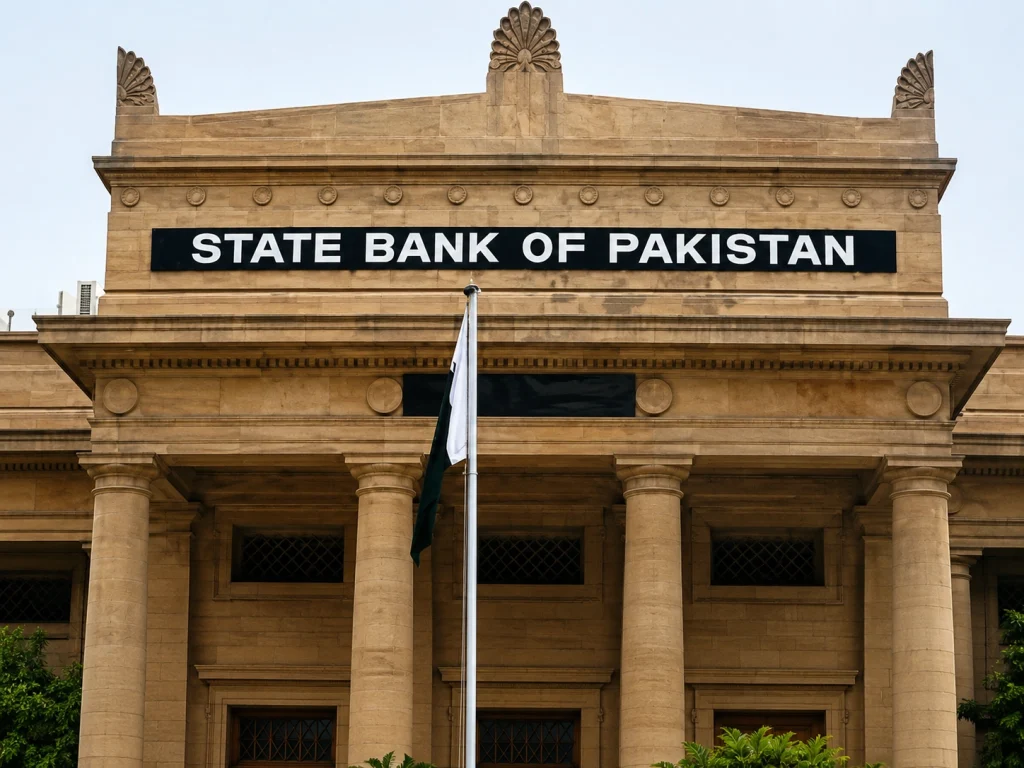
KARACHI: The State Bank of Pakistan kept its key interest rate steady at 11.5 percent, bringing the curtains down on fiscal year 2025-26 with a status quo as opposed to a rate hike. It is the first time since April 2026 when the central bank had increased SBP interest rate by 100 basis points that the bank has chosen not to raise interest rates. This comes amid persistently high inflation levels and slower growth in an oil market destabilized by the protracted Middle Eastern crisis.
The Monetary Policy Committee concluded that its existing position is still suitable for steering inflation towards the medium term objective of 5 to 7 percent despite headline inflation rising to 11.7 percent in May, an amount which was expected by many market analysts to have made a further hike necessary for the committee.
Reasons for Holding the SBP
It all comes down to analyzing conflicting information from both sides. On the one hand, inflation is now firmly entrenched above double-digit figures, with core inflation reaching 8.7 percent in May, and energy prices continue to be higher than the pre-war period despite a slight correction in global oil markets. On the other hand, there are already indications that economic activity will slow down, with weak confidence among consumers and businesses and the full effect of the previous rate rise in April still unknown.
It was observed by the MPC that the economic environment remains largely similar to the last meeting’s assessment, while the risk of further monetary tightening would only end up restricting growth while not generating any additional disinflation. It has been seen that there have been more central banks across the world that have started increasing their interest rates on account of inflationary consequences resulting from the Middle Eastern conflict.
Inflation Surge Despite Expectations for a Peak Next
The topic of inflation requires serious consideration. The overall level of inflation witnessed a sharp rise from 7.3% in March to 10.9% in April and further increased to 11.7% in May – a two-month period of acceleration, resulting due to the low base last year, along with the immediate and indirect impact of Middle East unrest on energy prices.
The core rate of inflation, after removing the volatility from both food and energy components, also rose to 8.2 percent in April and to 8.7 percent in May. The food component was further impacted by the sharp increase in prices for wheat and wheat products during this period.
GDP Growth Recorded at 3.7% in FY26 Below Capacity
In terms of growth, the provisional figures show real GDP growing at a rate of 3.7 percent in FY26. While this is better than the 3.2 percent seen in FY25, it is below the trend that had been established before the outbreak of hostilities in the Middle East. This fact was admitted by the MPC, which noted that the growth trend prior to the war was relatively high.
Manufacturing grew strongly at 6.5 percent during the seven months between July to March in FY26 despite slowing momentum indicated by frequent data. Moving into FY27, the committee noted that weak agriculture growth expectations, especially with initial reports of bad weather affecting Kharif crops, could be an additional headwind to overall moderate growth expectations.
ALSO READ: SBP Set to Reveal Interest Rate Decision in Final Policy Meeting of the Fiscal Year
Reserves Rise, Foreign Account Maintained
One area where Pakistan shows relative strength is its external account situation, which provides some of the most straightforward positive developments within the country’s current economic environment. The central bank of Pakistan has foreign exchange reserves that total US$17.2 billion as of June 5, 2026, owing to the completion of IMF review under EEF and RSF.
Central bank forecast shows reserves reaching $18 billion by June 2026, which is sufficient to ensure import coverage and mitigate balance of payments risks. Deficit in the current account amounted to only $0.3 billion in April, thus, resulting in the total deficit of the current account from July to April at $0.2 billion during the fiscal year 2026. Remittances are likely to stay high in May due to which the fiscal year deficit is going to be on the lower side of previous estimates amid higher energy imports.
Revenue Miss Not Harming Fiscal Efforts to Consolidate
In matters relating to the fiscal situation, there is a mixture of success and struggle. Fiscal consolidation continued largely as per expectations between July to March FY26, owing more to expenditure control than revenue generation. In a revision of its collection projections, the Federal Board of Revenue pegged its FY26 revenue collection target to about Rs13 trillion, considering slower revenue growth than last year.
In spite of the above limitation, the authorities have estimated that the fiscal year 2026 will record a budgetary surplus of 2.5 percent of GDP through the reduction of expenditure. This is expected to carry on to the following fiscal year when the authorities intend to attain a budget surplus of 2.0 percent of GDP. This was stated by the Monetary Policy Committee.
The SBP’s decision not to change interest rates on Monday marks an end to FY26 with a tone of extreme caution from the central bank. It has become clear from the SBP’s communication that its policy setting is currently correctly positioned, although the hints about inflation and international central banks’ moves have left the door open to tighter measures.
Given that the country expects high inflation levels to continue into the next few months, fiscal year 2027 starts off with monetary policy at an unusually uncertain point in time. How well the SBP can orchestrate a soft landing – bringing down inflation close to its target of 5-7% without stifling the weak economy – is set to be the narrative in the coming year.

Nayab Fatima is a university graduate and an emerging media professional with a strong passion for journalism, research, and independent reporting. She specializes in developing well-researched, fact-based, and analytical news stories covering a wide range of sectors, with particular expertise in technology, telecommunications, aviation, and the automobile industry.