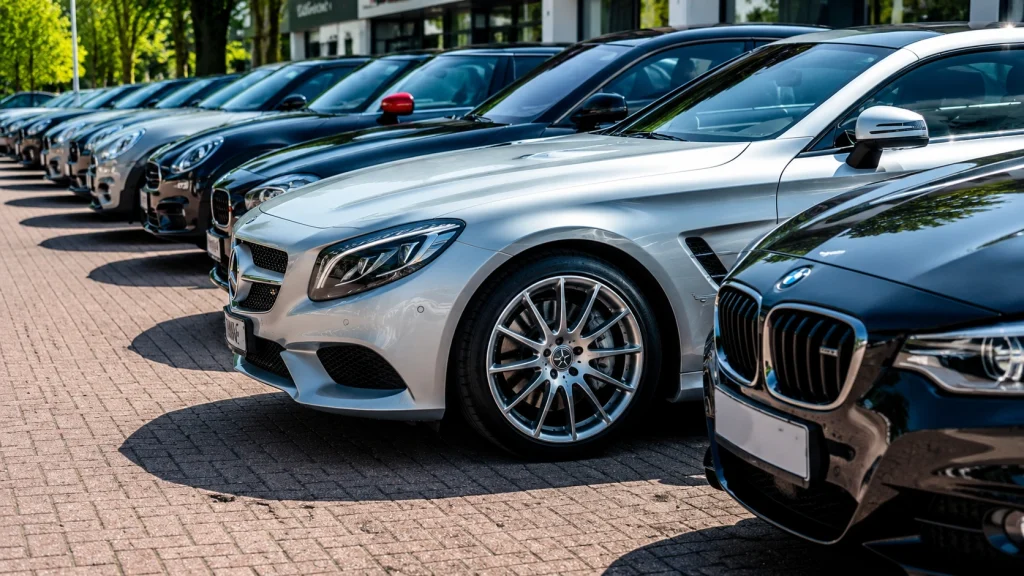
ISLAMABAD: Finance Minister Muhammad Aurangzeb introduced a stringent taxation policy for the automotive industry in the Federal Budget 2026-27. The government is levying heavy taxes on luxury cars imported into the country, indicating that it will start taxing luxury consumption in order to increase its revenue.
This fiscal policy aims at imposing taxes on ICE cars more than 2,000cc and premium EVs with an import price exceeding Rs20 million.
Also Read: Pakistan Introduces 19.5% Carbon Tax on 2000cc+ Cars
A Special Excise Duty (SED) is levied by the government on all imported ICE vehicles and SUVs where the size of the engine capacity exceeds 2,000cc. The net effect is an increase in landed costs for premium motorists as well as business operators who import these cars.
| Vehicle Category | New SED Rate |
| 2,000cc – 3,000cc | 40% |
| Above 3,000cc | 41% |
EV Market: The End of Zero-Tax Luxury
Until now, the government was giving exemptions to imported premium EVs when paying for Federal Excise Duty (FED). Authorities now categorize these vehicles based on their assessment value defined as the vehicle’s price plus cumulative customs duties and apply aggressive tax brackets.
- Mid-Range Luxury (Rs20m to Rs30m): These vehicles now face a 30% FED.
- Ultra-Luxury (Above Rs30m): These imports attract a punishing 40% FED.
The “Austerity” Catch: Tax Cuts vs. New Hikes
While the budget documents mention modest reductions in Regulatory Duty (RD) and Additional Customs Duty (ACD), these minor concessions fail to offset the massive impact of the new excise duties. For most luxury imports, the final price at the showroom will climb significantly despite these marginal relief measures.
Also Read: Hybrid Car Prices in Pakistan Could Jump Rs17 Lakh From July
The government articulates a twofold motive behind this aggressive taxation. Primarily, officials aim to extract higher revenue from the wealthy elite who purchase high-value imported luxury goods.
In the budget presentation in the National Assembly, the finance minister Muhammad Aurangzeb announced that the focus of the budget was on increasing the burden of taxation on luxury spending and imports of expensive goods so as to increase tax generation without affecting the poor people in the society. In addition, he said that the budget was designed to boost local industries.
Simultaneously, the policy protects the nascent domestic automotive sector. By extending tax exemptions for locally assembled electric cars and two-wheelers through June 30, 2027, the state forces a market pivot. It makes imported luxury increasingly expensive while incentivizing investment in domestic EV assembly plants.
With this budget, the administration clearly signals its intent to discourage the drain of foreign exchange reserves on premium non-essential imports, favoring local production as the primary engine for the country’s economic roadmap.
Faraz Ali Ansari is the Founder & Editor of Focus Pakistan and Founder & CEO of Focus Public Relations. With more than 22 years of experience in journalism, media relations and strategic communications, he covers business, economy, aviation, technology, public policy and corporate affairs. He has worked with leading national and international organizations across multiple sectors.