


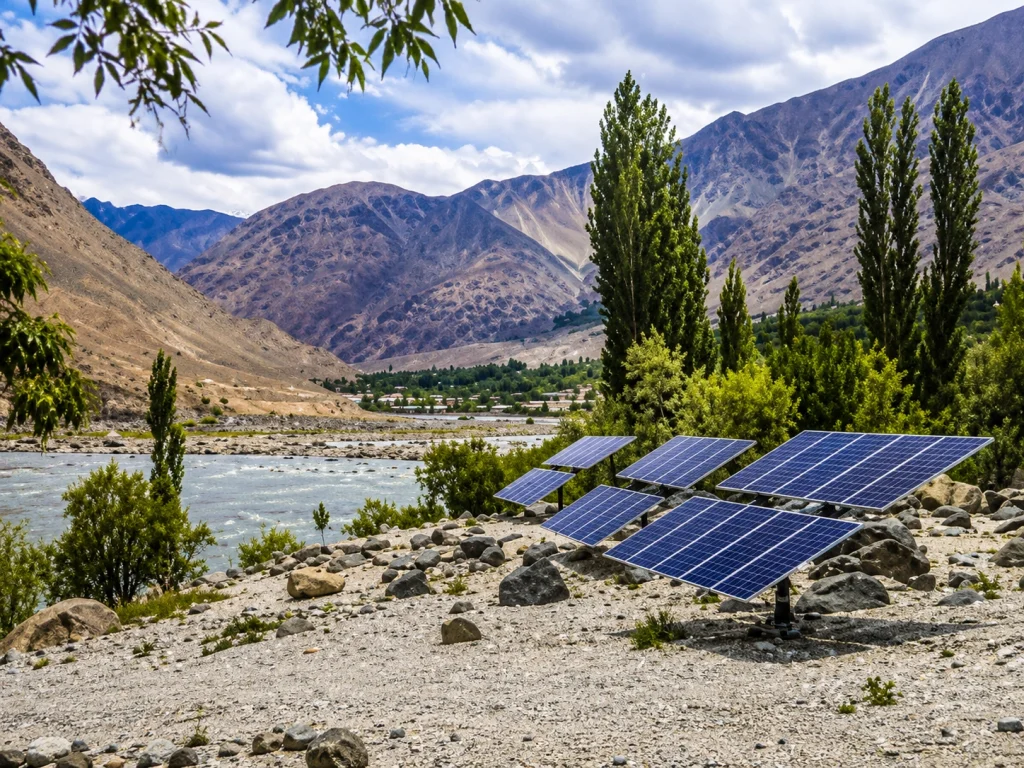
One of the most important energy projects of Gilgit Baltistan was expedited by Prime Minister Shehbaz Sharif on Tuesday as he directed officials to fast track the construction of the 100MW GB Solar Power Project and ensure its completion as soon as possible. This was stated in a statement issued by the Prime Minister’s Office (PMO).
Independent audit required along with the fast-tracked schedule
The prime minister also included the demand for an independent audit with his fast-tracking of the solar power plant project. This is because such an auditing would allow verification of each phase of the construction of the solar power plant by the independent party involved in the process. In doing so, the government would prevent any form of costs escalation and disputes regarding quality control that might otherwise become part of similar projects undertaken before. In a press release, it was stated that the Centre would cater to all costs involved in the project.
Three solar projects moving in parallel lines in GB
The briefings at the time indicated that along with the flagship 100MW solar project, there are two more small but fast moving solar projects which have been initiated already. A 18MW solarization project for government buildings is being implemented in Gilgit and Diamer divisions, which will be completed by the end of December, while the similar one for government buildings in Baltistan division will be completed by the end of October.
In addition, it was confirmed that an 82MW solar power project aimed at supplying homes in Gilgit, Skardu, Chilas, and Khaplo is still underway. When taken altogether, the combined capacity of all the above projects equals 200MW, which is intended to supply Gilgit-Baltistan with reliable solar power.
ALSO READ: Finance Minister Clarifies IMF Did Not Seek Tax on Solar Panels
A two-year-long project in the making
The GB solar energy project has progressed in a well-thought-out process of approval instead of springing up out of the blue. Approval of the 100 MW project was granted by the National Economic Council’s Executive Committee in August 2025; subsequently, Sharif approved the project that very year, making it very clear that the intention of the project was to generate sustainable power for the area. The need to push ahead with the project on Tuesday is due to the implementation stage having been reached.
Messages conveyed through the timeline pressure
The attempt by Sharif to speed up the GB solar power initiative, in conjunction with the need for independent verification, indicates that there is some level of political significance associated with this regional energy project due to the history of energy problems experienced in Gilgit-Baltistan, which remains strategically important in the overall national development strategy of Pakistan. It will be seen whether the accelerated timeline will prove sustainable; this will be observed through the process of independent verification of project activities.

Nayab Fatima is a university graduate and an emerging media professional with a strong passion for journalism, research, and independent reporting. She specializes in developing well-researched, fact-based, and analytical news stories covering a wide range of sectors, with particular expertise in technology, telecommunications, aviation, and the automobile industry.