
According to Commerce Secretary Jawad Paul, the National Assembly Finance Committee has been informed that the Year-II of the National Tariff Policy eliminates the age constraint for importing commercial used vehicles and eliminates the additional Regulatory Duty over a period of three years.
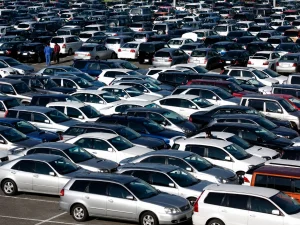
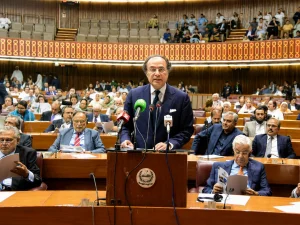
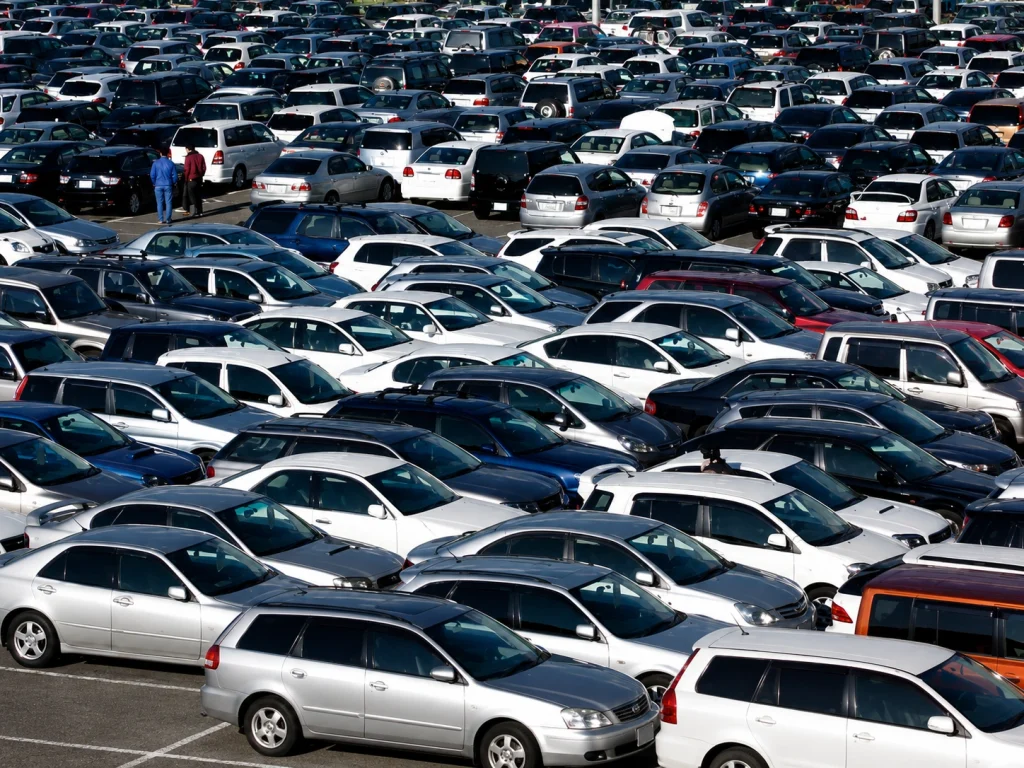
ISLAMABAD: The import policy of Pakistan in respect of used vehicles is set to undergo a massive change. The Federal Secretary for Commerce Mr Jawad Paul revealed in front of the Standing Committee of the National Assembly on Finance that the government will abolish the restriction on Used Car Import Age five years along with reducing the regulatory duty from 40 percent to 30 percent during the second year of the National Tariff Policy in 2026-27.
Changes in Commercial Used Cars Import
Briefing the committee regarding Year-II budget preparation as per the National Tariff Policy, Paul affirmed that the government intends to remove the five-year limit imposed on the Used Car Import Age, provided that the environmental and quality requirements remain. The removal of the age limit of used cars imports stands out as the most liberalizing move in the country’s automobile import policy in recent years.
Phase-down of Regulatory Duty over three years
In addition to the relaxation in the age restriction, the other regulatory duty levied on imported commercial second-hand vehicles will be reduced from 40% to 30% for the next fiscal year, and will eventually be phased out to zero in three years’ time.
Japanese companies to conduct pre-shipment inspection
In order to ensure safety and compliance with environment laws, it has been stated by officials that the task of pre-shipment inspection will be assigned to chosen Japanese companies. It is an inherent quality control measure that has been added to the policy, since one of the biggest concerns about the Used Car Import Age is that there may be influx of low quality cars into the market.
The larger tariff reforms process that is related to the change
The new policy on the used cars is part of a much bigger process of rationalising tariffs. Paul informed the committee that the second phase of the National Tariff Policy (2025-30) which would become effective from July 1, 2026, would amount to Rs143.4 billion loss for the government in terms of revenues, whereas during 2025-26 the revenues were lost Rs125 billion due to reduction in custom duties.
In his elaboration, he stated that the primary structural change of the current year was going to be rationalization of custom duty slabs to a maximum of 50%, excluding alcohol, which will continue to pay 90% of duty as before. In the case of auto duties, they will be integrated according to the adopted Auto Policy 2026-2030.
ALSO READ: New Mitsubishi Pajero vs Toyota Prado: Early Comparison Revealed
Several thousand tariff items have been impacted
The reform proposals go much further than the automotive industry, encompassing rationalization of Customs Duties, Additional Customs Duties, Regulatory Duties, and Fifth Schedule exemptions. There have been reductions in duties applied on several thousand tariff items along with the elimination of unnecessary exemption entries; these have been advised to be sufficient for reducing Pakistan’s average tariff rate overall and generating a revenue impact of around Rs143.4 billion.
The chairman of the committee warned that trade liberalization should be undertaken in a phased and balanced manner, in order to safeguard domestic industries while at the same time improving competitiveness and export performance. The chairman said that low tariffs would have to be reflected in reduced cost of production and cheap prices to the consumer, and not only favoring importers.
- Staged implementation: Implementation of phased tariff reforms suggested with regular impact assessments.
- Progress reports: National Tariff Commission is expected to report progress regularly.
- Industry protection: Sufficient protection for industries considered strategic is recommended.
With regard to another and equally important issue in the agenda of the committee, there was analysis of proposed amendments in the Petroleum Products (Petroleum Levy) Ordinance, 1961, with emphasis on enforcement mechanisms against OMCs who default.
As observed by the chairman, OMCs are just agents of the government in the process of collecting levies and cannot be allowed to keep the money, and there should be an enforcement mechanism where product supplies will be cut off for 30 days in case any OMC fails to pay its levies. There is the need for the Petroleum Division to re-draft these amendments in such a way that there should be no provision of instalment options at all.

Nayab Fatima is a university graduate and an emerging media professional with a strong passion for journalism, research, and independent reporting. She specializes in developing well-researched, fact-based, and analytical news stories covering a wide range of sectors, with particular expertise in technology, telecommunications, aviation, and the automobile industry.