



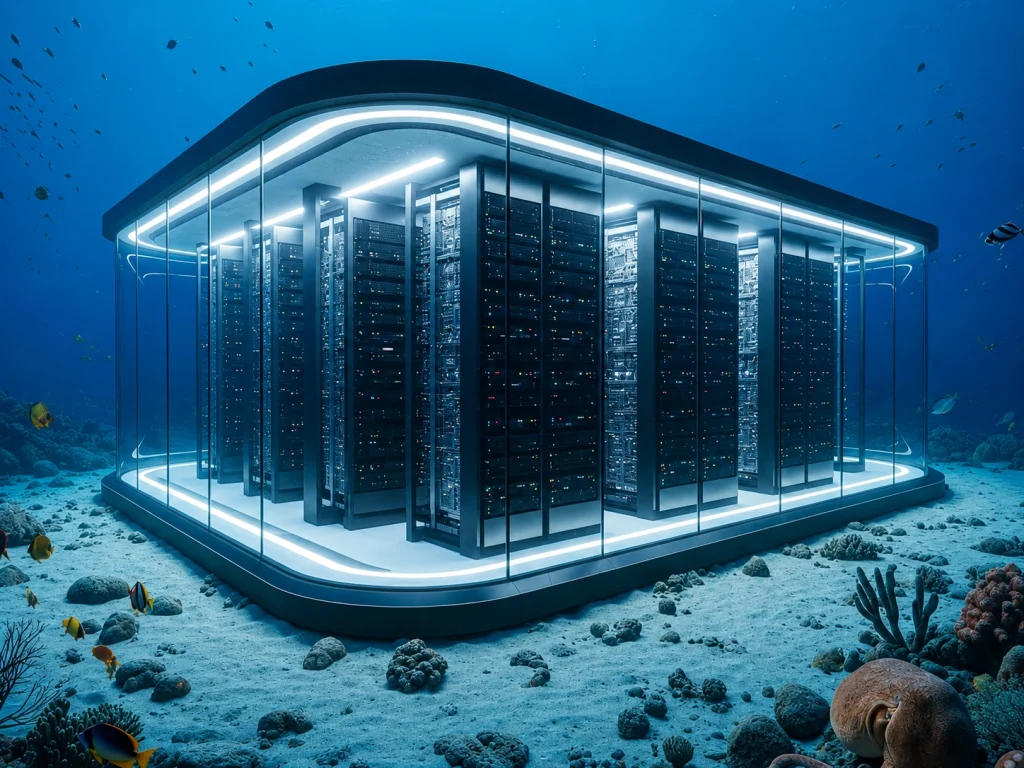
HiCloud Technology and China Telecom placed a 24-megawatt AI data center underwater, 10 kilometers off Shanghai, in May 2026. It requires no freshwater, uses offshore wind power, and works way more efficiently than land-based centers. Looks like the future of computing is wetter now.
SHANGHAI: In May 2026, China launched the world’s first commercial underwater AI data center. This wasn’t just a test; it was a full commercial operation. Developed by HiCloud Technology and China Telecom, the center is located about 10 kilometers off Shanghai in the Lingang Special Area.Sunk to the seafloor, it uses cold ocean water for cooling, avoiding the high energy use of traditional centers. This 2026 project isn’t just a small test; it’s built for real use. It’s an operational system handling major AI tasks in full swing.
“A PUE below 1.15 achieved commercially is not an incremental improvement. It is a structural leap the kind that forces every hyperscale operator on land to recalculate their long-term infrastructure roadmap.”
How It Actually Works
Seawater replaces the cooling tower entirely
Traditional data centers use tons of energy for cooling, mostly via big AC systems and cooling towers along with a heap of fresh water. In fact, massive land-based data centers may get through millions of liters of water daily.
The China underwater AI data center from 2026 changed all that. Instead of setting up on land, they put the whole thing in the ocean. Seawater just flows around sealed server pods, soaking up heat naturally and constantly. No pumps, no chillers, and absolutely no need for freshwater. So, it works totally differently but is way more efficient at keeping servers cool while using zero towers or freshwater infrastructure.
Think of it this way: for every 1.15 watts pulled from the grid, the servers actually do useful work with each watt. This is what a Power Usage Effectiveness score under 1.15 means. Data centers usually get scores around 1.5 to 1.6. Though the difference looks small, running a 24-megawatt facility at this efficiency rating for a year still incurs major costs. It makes such big numbers that even large utility companies sit up and take notice.
The center cools with seawater and runs on renewables, boasting a carbon footprint better than any current land-based facility. This shows China’s big push for low-emission digital infrastructure in fact, the facility is so cutting edge, most people will only ever know it exists online.
ALSO READ: Google Plans to Release 32 Million Lab-Bred Mosquitoes in Bold Fight Against Deadly Diseases
How It Compares to What Came Before
Microsoft’s Project Natick proved it was possible China proved it was commercial
Microsoft’s Project Natick showed it was possible, while China took it a step further by proving it could be done commercially. Underwater data centers aren’t brand new. Microsoft tried out its idea off the Orkney Islands in Scotland. They dropped a pod full of servers into the sea and watched how it did over time. Turns out, the underwater setup worked just fine. In fact, the servers under water failed less often than those on land. This likely happened because the ocean kept things nice and cool and steady, without big temp changes or too much humidity messing things up. Plus, there was no one around to accidentally bump cables or whatnot.
What Microsoft didn’t do was scale Natick to commercial operations. But the China underwater AI data center 2026 deployment changes that. HiCloud’s facility runs at 24 megawatts, making it more than just a research pod. It’s an actual production asset serving paying customers and real AI tasks.
| Factor | Conventional data center | China underwater AI DC 2026 |
|---|---|---|
| Cooling method | Air conditioning + freshwater | Natural seawater — passive |
| Freshwater use | Millions of litres per day | Zero |
| PUE rating | ~1.5 to 1.6 average | Below 1.15 |
| Energy source | Mixed grid — often fossil | Offshore wind + grid |
| Energy consumption | Baseline | Up to 90% lower |
| Commercial scale | Proven | Now proven underwater |
Why This Matters for the AI Industry
The energy problem at the heart of AI
The energy issue at the heart of AI is huge. Training big language models and other generative AI systems needs an insane amount of computing power, which in turn eats up tons of electricity. In fact, a single training session could use more juice than hundreds of homes in a year! As AI gets more popular worldwide, data centers hit a major roadblock. Electric grids can’t keep pace with demand, and using water for cooling is a strain in lots of areas. Plus, space to build new centers is super scarce in coastal cities.
In 2026, China’s underwater AI data center tackles all three limits at once. It utilizes offshore space that doesn’t conflict with anything on land. The center gets endless cooling from seawater. Plus, it needs so much less energy that it can do way more computational work than a regular facility with the same grid capacity.
A blueprint for coastal nations
Industry analysts keeping an eye on Lingang see it as big for coastal nations worldwide. Countries with long coastlines, abundant offshore wind resources, and expanding AI ambitions like those in South and Southeast Asia are dealing with the same data center water and energy issues as China. Should HiCloud show reliability over several years, the underwater approach might set the standard for the next wave of sustainable, large-scale AI infrastructures globally.