

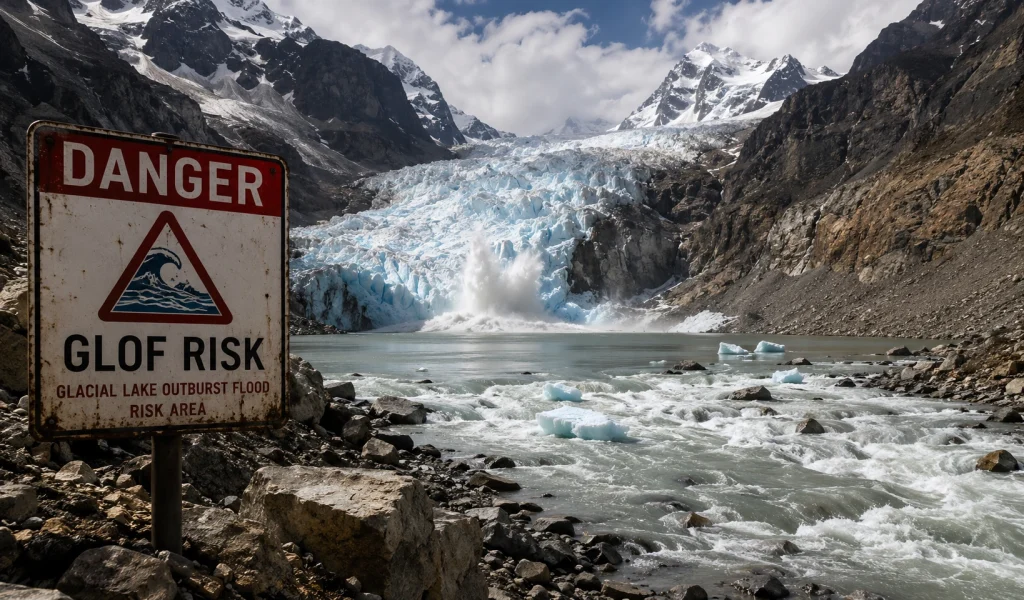
ISLAMABAD: The Pakistan Meteorological Department issued a glacial lake outburst flood alert for Gilgit-Baltistan and Khyber Pakhtunkhwa on Friday, warning that soaring temperatures will persist through the first week of July and that the consequences for millions of mountain-dwelling Pakistanis could be catastrophic.
The PMD alert landed just days after Suparco Pakistan’s national space agency identified 130 potentially dangerous glacial lakes with possible risks to downstream settlements, basing its latest assessment on satellite images captured on May 31 and June 1, 2026. Of those 130 lakes, 24 are currently unfrozen and under close observation.
The numbers tell a story that no government press release quite captures. Pakistan’s northern mountain ranges the Hindu Kush, Himalayas, and Karakoram have produced 3,044 glacial lakes in Gilgit-Baltistan and Khyber Pakhtunkhwa alone as rising temperatures accelerate glacial melt. More than 7.1 million people in these two regions remain directly vulnerable.
What a GLOF Actually Does
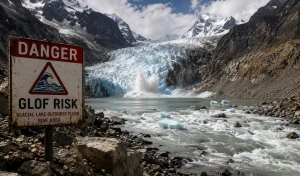
A glacial lake outburst flood is not an ordinary flood. When warming temperatures weaken the natural ice or moraine barriers holding a glacial lake in place, the dam fails sometimes without warning, sometimes in the dead of night. Such outbursts release millions of cubic metres of water and debris in just a few hours, destroying property, infrastructure, and livelihoods in some of the most remote areas of Pakistan.
The PMD warned Friday that this week’s heat surge will substantially accelerate snow and ice melt in glaciated valleys, cause existing lakes to expand rapidly, and push new lakes into existence from the sheer volume of meltwater now running off Pakistan’s mountains. Downstream settlements face sudden inundation. Mountain slopes face debris and mud flows. Steep terrain grows unstable.
Also Read: Pakistan Faces Dangerous Glof Threat After Heavy Rain Warning
Ghizer Valley in GB witnessed exactly this scenario in August 2025. A glacial lake above Tildas village burst at 3am, blocked the Ghizer River for six hours, created an artificial lake, and affected more than 330 households across six villages. Only a shepherd named Wasiyat Khan awake near the glacier and quick with his mobile phone alerted the community in time to prevent mass casualties.
Not every valley gets that lucky.
Climate Change, El Niño, and a Budget Cut
The threat this summer carries extra weight. Suparco warned that the El Niño Southern Oscillation has entered its El Niño phase, with warmer-than-normal sea surface temperatures developing across the central and eastern Pacific Ocean a global climate shift expected to influence weather patterns across Pakistan during the 2026 monsoon and winter seasons. For GB and KP, that means hotter conditions, faster melt, and a more volatile monsoon.
Pakistan’s Indus River already receives 50 percent of its annual flow from glacial and snowmelt, while hydropower dependent on glacial flow supplies approximately 29 percent of the country’s electricity. The glaciers sustaining that system are disappearing.
Yet Pakistan chose this moment to cut spending on the institutions designed to respond. The government reduced the climate ministry’s development budget allocation from Rs3.5 billion to Rs2.48 billion, a decision Dawn’s editorial board described as a costly policy error as climate-related hazards multiply.
Seven Million People, One Warning System
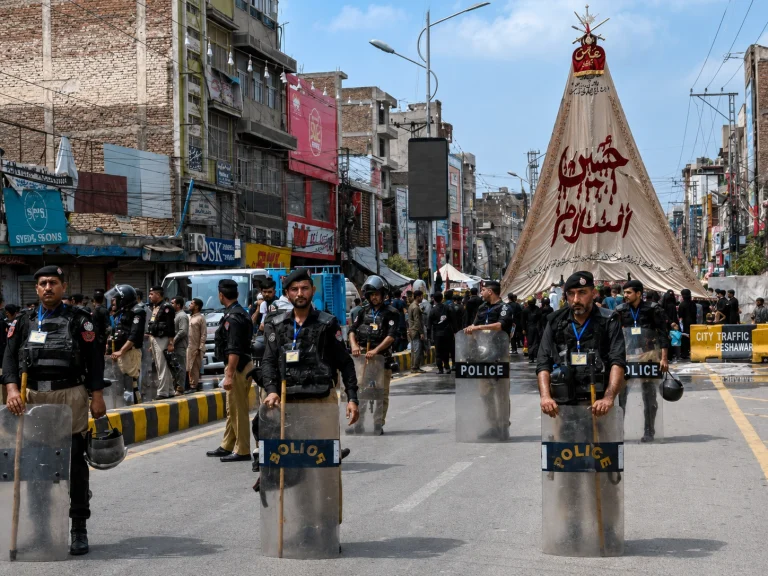
The PMD told residents and visitors to stay away from riverbanks, stream beds, and local nullahs; to avoid camping or trekking near glacial lakes and narrow mountain valleys; and to keep clear of steep slopes where melting snow can trigger landslides without notice.
KP’s health department separately instructed hospitals across the province to establish heatwave emergency units for sunstroke victims a second crisis running parallel to the glacial threat.
Pakistan’s GLOF-II project has deployed 218 early warning systems, constructed 411 gabion walls, rehabilitated 317 irrigation channels, and established 60 safe havens across 24 vulnerable valleys benefiting more than 211,000 individuals. Against 7.1 million at risk, sources told Focus Pakistan, that coverage remains dangerously thin.
The glaciers will keep melting. Whether the communities beneath them survive the summer depends on decisions made now and on warning systems reaching the right valleys before the water does.