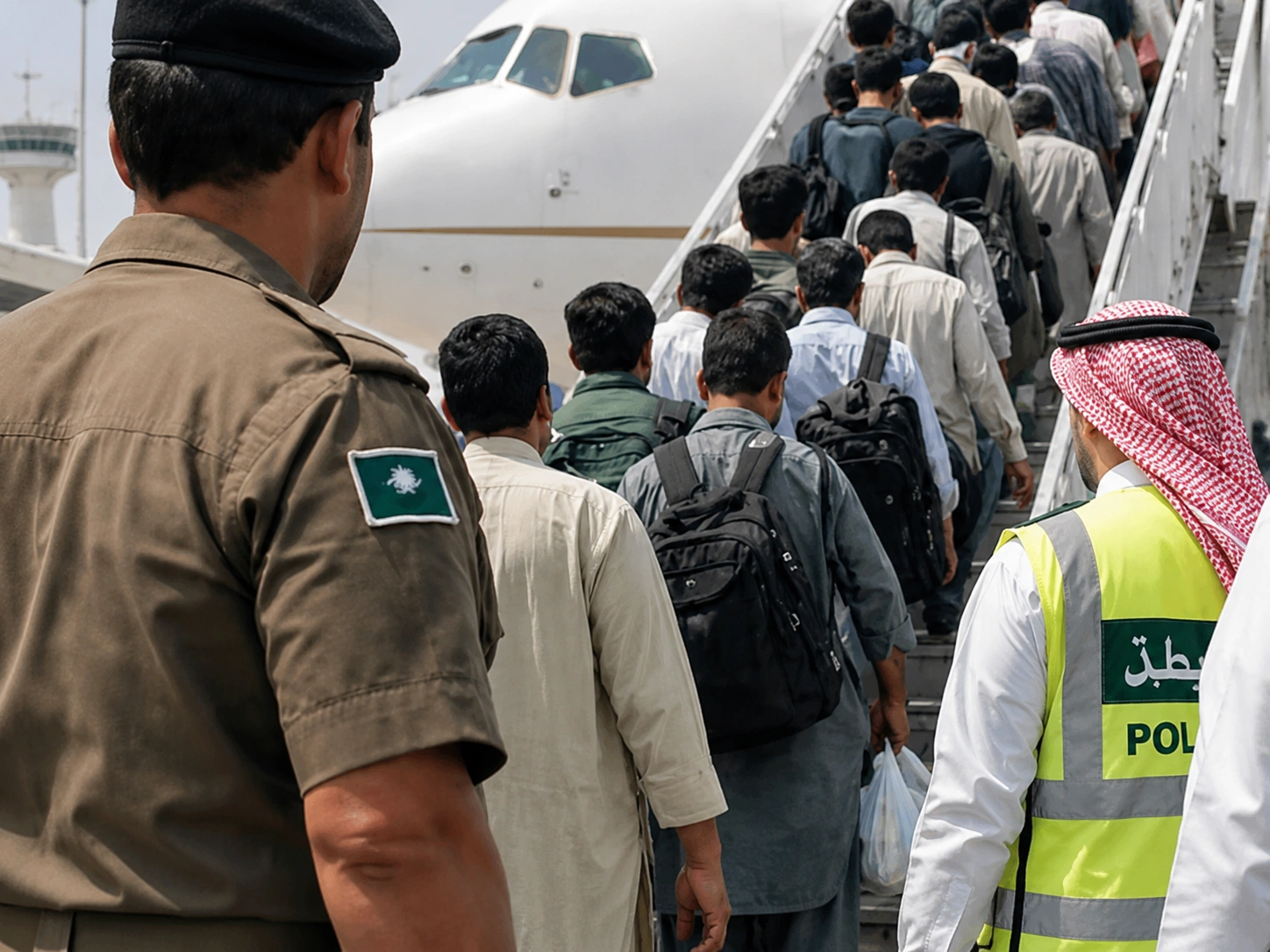

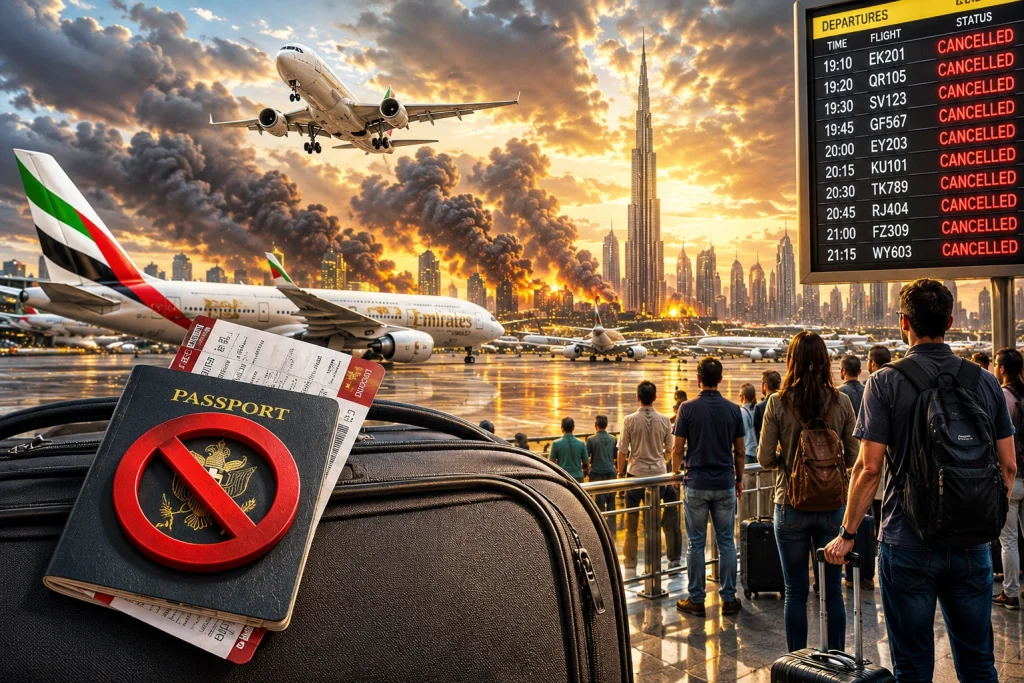
The Iran was is responsible for delivering one of the biggest blows to the Middle Eastern travel industry in the aviation era. It has resulted in tens of thousands of flight cancellations, doubled the cost of aviation fuel, triggered refund requests and forced travel companies operating in the region to lay off staff down to Pakistan.
The repercussions of the strike on the Middle East have been felt right from day one since the attacks on Iranian military bases by the U.S. and Israel commenced on February 28, 2026. Within a couple of days of the start of the conflict, more than 23,000 flights were canceled to destinations within the Middle East, leading to a loss of nearly $1 billion to the airlines.
The Airspace Collapse
The Iraqi airspace, known as the Baghdad Flight Information Region, was closed down after massive strikes and Iran’s subsequent retaliation in the region, considering that Iraq forms part of the route linking Israel to Iran. The European Aviation Safety Agency issued an information bulletin advising operators to stay out of the skies in Iran, Iraq, and Lebanon airspace while being careful in Bahrain, Israel, Jordan, Kuwait, Qatar, UAE, Oman, and Saudi Arabia.
However, the effects were more pronounced for airlines operating from the Gulf area where their hub and spoke systems depend on efficient operations and connections in that area, thereby affecting the huge number of passengers passing through such hub airports daily. British Airways cancelled all flights to Amman, Bahrain, Dubai, and Tel Aviv. Dubai International Airport shut temporarily. Bahrain’s international airport closed its airspace entirely, while Iraq extended its closure through mid-week as a precautionary response to the regional security deterioration.
Also Read: Global Airlines Slash 2026 Profit Forecast as Iran War Sends Fuel Costs Soaring
Jet Fuel: The Price Nobody Can Absorb
Cancellations are happening against the backdrop of a fuel price problem that is without parallel in the history of aviation. The price of jet fuel has almost doubled since the beginning of the war. Jet fuel prices have risen far more sharply than gas and diesel prices, placing additional financial pressure on airlines and forcing carriers to increase ticket fares.
The arithmetic is punishing. The cost of fueling the aircraft filled by strikes on February 27 was about $17,000. The price soared beyond $27,000 on March 5. US airlines’ cost of fuel has risen by 56.4 percent for the month of March, as compared to that of February, to reach $5.06 billion, which is 30 percent higher than those of March last year.
Also Read: Govt Crushes Aviation Sector with Massive Rs53/Litre Jet Fuel Bombshell
As stated by the International Air Transport Association, the world airline industry will record a total net income of $23 billion in 2026, an amount considerably smaller than the predicted $45 billion in 2025 and even smaller than the $41 billion anticipated last year owing to the high rise in fuel prices triggered by the war in Iran. Jet fuel already accounted for around 30 percent of airlines’ operating costs before the conflict, according to IATA research. The war turned that structural vulnerability into a crisis.
Travel Companies Bleed: Wego Cuts Staff, Including in Pakistan
The shockwaves have hit travel companies operating across the Middle East with particular force. Wego, one of the region’s major travel firms, told Focus Pakistan that the crisis has forced it to cut its workforce by 10%, a reduction that extends to its Pakistan-based staff.
“Company had no choice,” one of the company’s executives explained anonymously. “Thousands of our customers had asked for refunds after their flights were canceled or became too costly to operate. The sheer number of these refunds, coupled with the drop-off in new business, meant that we could not afford the manpower anymore.”
He pointed out that the financial obligation amounts to millions of dollars and that clients in the Middle East and South Asia are looking to get refunds for tickets they have bought prior to the start of hostilities. The airlines and tourism agents are currently caught between the proverbial hammer and the anvil.
Tourists Stay Away, Sector Haemorrhages
Traveler’s reaction to the situation is logical – everyone stops traveling. Arrivals of tourists in the Middle East fell by 14 percent in Q1 2026 based on UN Tourism figures, despite an increase in global tourism of two percent. Hotel occupation rates in the area fell from 75 percent in January to 48 percent in March.
Oxford Economics puts the cost to the region in terms of lost foreign visitors at between 23 million and 38 million compared to previous predictions before the war, resulting in an estimated loss of between $34 billion and $56 billion in visitor spending including the effect of sentiment which will last even after a cease-fire.
The scale of that reversal is striking. Before the war began, forecasters projected international tourist arrivals to the Middle East would grow 13% in 2026. The conflict converted that expected boom into a sharp contraction with GCC countries facing declines of up to 26% and non-GCC countries potentially seeing arrivals fall by as much as 34% if hostilities drag on.
Nine major airports across the region lost an estimated 27 million passengers and up to $1 billion in revenue during March and April alone as airlines avoided restricted airspace and operated well below planned schedules.
Fares Rise, Demand Dries Up
For travelers who still want to fly, affordability has become the new barrier. Fuel costs for commercial flights have increased by more than 80 percent since the start of the U.S.-Israeli attack on Syria in late February, forcing airline companies to either raise prices or scale down services and sometimes both, with predictions that once the war is over, prices will not revert back to pre-war levels.
The problem airline are facing is a difficult situation where the consumer remains very sensitive to the cost of tickets, hence making it impossible to pass on all the increased costs due to higher fuel costs into ticket prices. In effect, airlines have increased luggage charges, cancelled some flights, and reduced capacity because of rising costs.
The Iran crisis has exposed weaknesses in the aviation industry, which continues to recover from the pandemic while grappling with a fuel shock that airlines and analysts did not include in their 2026 projections. For the Middle East travel sector which entered this year on its strongest post-pandemic trajectory the losses represent not just a short-term disruption but a potentially transformative setback.

Faraz Ali Ansari is the Founder & Editor of Focus Pakistan and Founder & CEO of Focus Public Relations. With more than 22 years of experience in journalism, media relations and strategic communications, he covers business, economy, aviation, technology, public policy and corporate affairs. He has worked with leading national and international organizations across multiple sectors.