


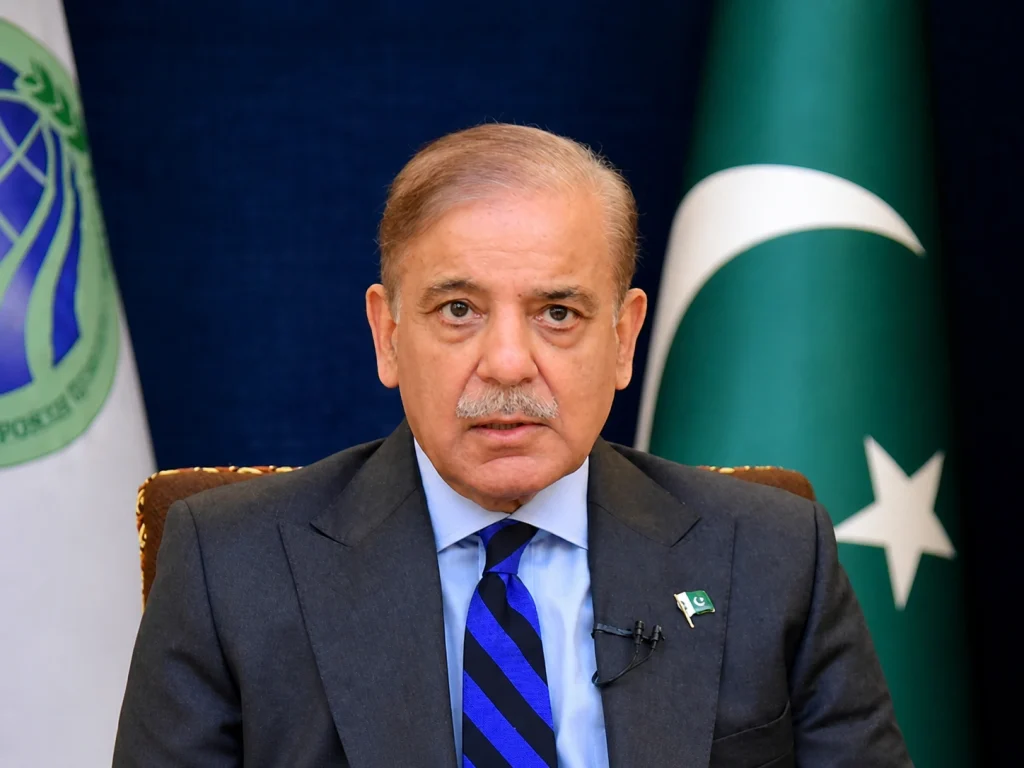
The authorities of Pakistan were able to voice their clear disapproval regarding the missile strike on the United Arab Emirates by using drones. By supporting the leadership of the United Arab Emirates, the Prime Minister of Pakistan, Mr. Shehbaz Sharif, made Pakistan a clear supporter of the United Arab Emirates at a time when all of the Middle Eastern security situation was becoming very confrontational.
Prime Minister Shehbaz Sharif addressed the Pakistan condemns UAE attack statement personally, expressing full solidarity with UAE President Sheikh Mohammed bin Zayed Al Nahyan and describing the strikes as an unacceptable attack on a friendly nation.
As noted by the UAE’s Ministry of Defence, the assault came straight from Iran; thus, it could not have remained a regional issue but was elevated to the level of conflict between Iran and the US.
UAE Ministry of Defence also stated that the UAE will have all the rights to react. The use of an integrated attack system using a total of 19 rockets, which include ballistic missiles, cruise missiles, and unmanned aerial vehicles operating simultaneously, is considered one of the most advanced types of attacks by experts in the defense field.
Pakistan requires diplomatic space and regional stability
Not only did he condemn the use of violence in the UAE, but another important point raised by him in his speech was that there is a need to de-escalate tensions in the region. What needs to be emphasized in this regard is that the Prime Minister of Pakistan should highlight the importance of observing a ceasefire in this stage so that there is enough scope for stability in the region.
The call for diplomatic leeway carries unique significance with regard to Pakistan’s appeal in light of the traditional Pakistani view of themselves as intermediaries in disputes between the Gulf states and Iran, who have traditionally maintained good relations with both parties separated by the longest rift within the Gulf region. In criticizing the behavior of UAE and urging a ceasefire simultaneously, Pakistan hopes to show its solidarity with its fellow Gulf states while not completely cutting ties with Iran.
ALSO READ: Pakistan’s Weekly Oil Import Bill Triples to $800mn: PM Shehbaz Sharif
Iran denies responsibility, blaming the aggressive posture of the US military.
The Iranian media portrayed an entirely different version of the events. According to Iranian security officials, it is believed that the Iranians did not launch the attack on the UAE. They have accused the Americans of military adventurism. The sources said that America was responsible for the attack and not Iran. This was clearly a contrary view from that of the UAE Ministry of Defense.
The denial from the Iranians is not an isolated case but follows in a trend of controversies involving the attribution of attacks that have occurred in the Gulf region in recent years, when the disparity between the claims made by governments and the facts has persisted for days or weeks following the event. The particularity of the claim from the UAE, which provides exact numbers and types of missiles fired, contrasts sharply with the denial from the Iranians, placing the burden of attribution on the international community.
Implications for the region as Pakistan calls for restraint
In light of the attack on the UAE and the following Pakistani condemnation of the UAE attack, it is apparent that the security condition in the Gulf has taken a turn for the worse. Not only has an attack been executed using various types of weaponry in a coordinated effort against one of the most economically powerful cities in the world, but it has done so within a single night.
The request by Pakistan for ceasefire respect and diplomatic engagement by the international community emanates from a sense of awareness of the cost of regional conflict, more so when compared with any other nation. How this is taken on board in those key capitals will ultimately dictate whether there is a move away from or toward confrontation in the region.

Focus Pakistan is an independent digital news and media platform dedicated to delivering credible, insightful, and impactful journalism across Pakistan and beyond. The publication covers a broad range of sectors including business, economy, technology, telecommunications, aviation, automotive, infrastructure, energy, tourism, public policy, and national affairs.
Committed to accuracy, transparency, and editorial integrity, Focus Pakistan combines breaking news coverage with in-depth analysis, feature stories, expert commentary, and research-based reporting. The platform aims to provide readers with timely, factual, and balanced information while promoting informed public discourse and responsible journalism.
Through its commitment to high editorial standards, Focus Pakistan strives to be a trusted source of news and analysis for policymakers, business leaders, industry professionals, and the general public.