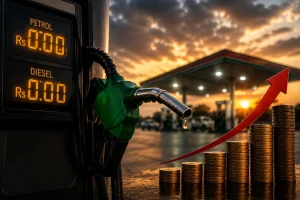

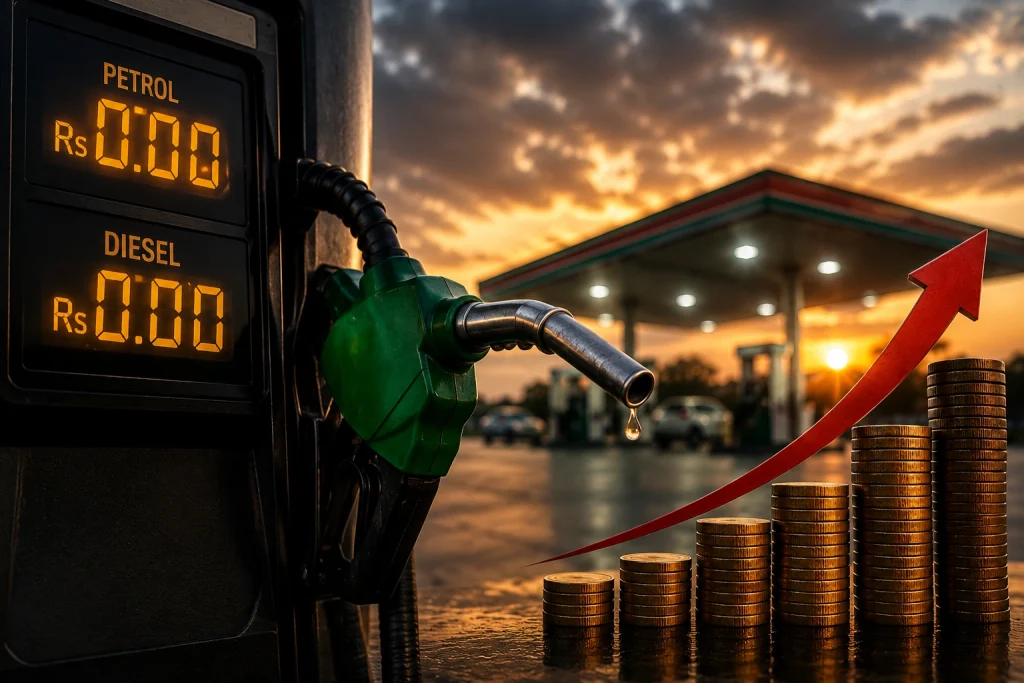
ISLAMABAD: The federal government has maintained the price of petrol and diesel unchanged for the present week, however; it has raised the Petroleum Development Levy (PDL) of both these petroleum products.
The levy of HSD has been raised by Rs6.57 per liter, bringing the total levy up to Rs79.54 per liter. An increase of Rs0.39 per litre in the petrol levy, making it cost Rs66.64 per litre. Kerosene oil levy, on the other hand, remained constant at Rs20.36 per litre. For the two fuels, the pump price also remained frozen.
How Prices Stay Still While the Tax Rises
To understand this paradox, it helps to understand how Pakistan actually prices fuel.
Pakistan’s fuel pricing mechanism combines international product prices, freight costs, exchange-rate adjustments, dealer commissions, OMC margins, the Petroleum Development Levy and other applicable charges before the federal government announces the final retail price.
Also Read: Pakistanis See No Fuel Price Relief
When global crude prices fall, that creates room inside the formula. Instead of passing the full reduction to the consumer at the pump, the government can absorb that downward movement by raising the levy leaving the retail price exactly where it was while quietly capturing the windfall into the national treasury. That is precisely what happened this week.
Unlike divisible taxes, Petroleum Development Levy proceeds remain with the federal government and are not distributed under the NFC Award, making the levy one of Islamabad’s most important revenue tools.
Why the IMF Matters Here
The levy is not simply a domestic revenue tool. The government has continued to shift the tax burden between fuel categories under fiscal consolidation measures linked to the IMF programme framework. Islamabad has committed to maintaining a minimum levy floor as part of its ongoing programme conditions which means levy adjustments are not purely political decisions. The IMF programme encourages Pakistan to maintain strong petroleum levy collections as part of its broader fiscal consolidation strategy.
Total petroleum levy collections already exceeded Rs1.2 trillion in the first nine months of the fiscal year, equal to about 82 percent of the annual target of Rs1.468 trillion. For FY2026-27, the government has set an even more aggressive target of Rs1.727 trillion, a figure that exceeds the combined value of Pakistan’s active IMF loan tranches.
What the Levy Actually Costs the Consumer
Before the April crisis, taxes, duties, and margins on petrol stood at Rs107.12 per litre, accounting for 42 percent of the total cost. At that rate, a driver filling a 40-litre tank was effectively paying over Rs1,700 in government charges alone not in fuel.
The levy’s peak came on April 3, when the prime minister increased the petroleum levy on petrol from Rs106 to Rs161 per litre in a single stroke, an increase of Rs55 in taxes alone. Public outrage forced an immediate partial reversal within 24 hours, but the episode demonstrated just how elastic the instrument is in the hands of the executive.
The levy bypasses the NFC, bypasses parliament, and bypasses provincial consultation. The federal government finalises the levy in Islamabad and enforces it through an official SRO.
This week’s quiet uptick in the diesel and petrol levy may not move the needle at the pump. But it moves the revenue line and that, sources confirmed to Focus Pakistan, is precisely the point.