

ISLAMABAD: Pakistan has decided to stop importing solar panels and batteries and start making them at home. Haroon Akhtar Khan, Special Assistant to the Prime Minister on Industries and Production, confirmed the decision on a recent TV show appearnce,” saying the government now puts the new solar policy through its final stages before formal announcement.
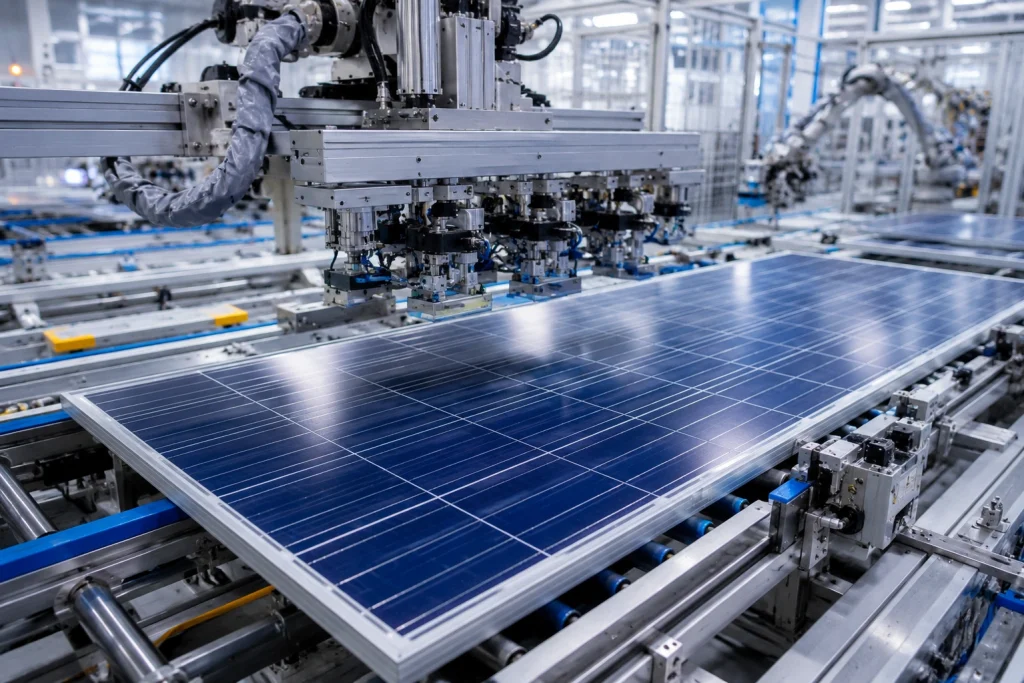
The policy marks a clean break from what Pakistan has done until now buying assembled components from China, snapping them together locally, and calling it manufacturing. Haroon Akhtar Khan said that stops. Under the new framework, Pakistan will produce solar panels from the ground up, on Pakistani soil, under Pakistani ownership.
“The core objective is to move the country beyond solar panel assembly toward complete local manufacturing,” he said.
Local Manufacturing Push
The cost case drives the decision as much as the industrial one. Pakistan spent billions in foreign exchange last year importing solar equipment, largely from China, as residential and commercial solar adoption exploded across the country. That spending left domestic industry with nothing to show for the boom. This new policy channelizes that money to the factories, employment, and supply chain in the area.
Also Read: EDB Urged to Cut Lithium Battery Taxes to Make EVs and Solar More Affordable
Cutting Import Dependence
Energy storage through batteries is central to this policy. As per Haroon Akhtar Khan, speaking to ARY News, the government regards batteries on par with solar panels. Solar panels produce electricity during the daytime. Without batteries, that generation means nothing after sunset. Pakistan wants to manufacture both panels and storage domestically, so the clean energy transition runs on local equipment rather than imported kit.
Battery Storage Takes Center Stage
The employment and investment argument backs the industrial one. Haroon Akhtar Khan said domestic solar manufacturing will pull in large-scale investment and create jobs across a sector that currently employs people only at the assembly and installation end. A full manufacturing base changes that equation entirely, creating demand for engineers, technicians, factory workers, and component suppliers up and down the supply chain.
Energy security gives the policy its longest-term justification. Pakistan’s power sector has spent decades lurching from one supply crisis to another, each one rooted partly in dependence on imported fuel or equipment. A domestic solar manufacturing industry breaks that pattern. Pakistan will be able to ensure its own energy production process, instead of depending on China’s exports, which can lead to any disruption or changes in currency exchange rates.
The announcement of Haroon Akhtar Khan has not given an official start date for the policy. However, he referred to it as being in its final stages and implementation schedules would follow. In reality, the message conveyed by the announcement is that solar panel manufacturing is now considered as industrial policy.
Solar capacity installed by Pakistan has increased more in the last two years compared to any other time in the past. The government now intends for the next step to focus on developing the local industry.